When: spring, summer, autumn, winter
Ideal for: couples, families, groups, solo visitors
How: on foot or by bike
Introduction
Through its squares, loggias, and palaces, the city tells a story of merchants, artists, and citizens who have shaped its vibrant and culturally rich identity. This itinerary invites visitors on a journey between past and present, celebrating the deep connection between architecture, commerce, and local traditions.
1. Corso Italia
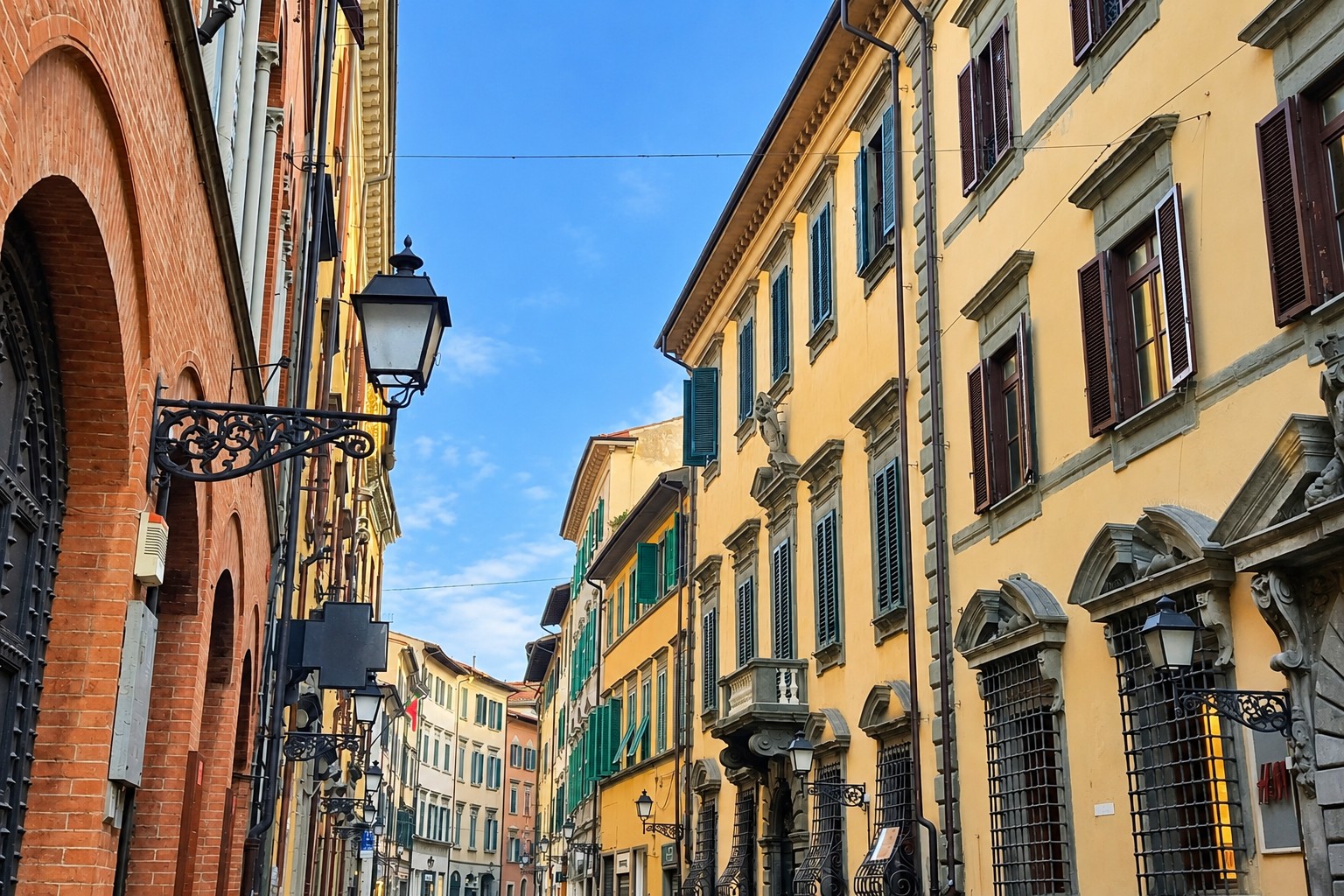
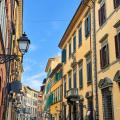
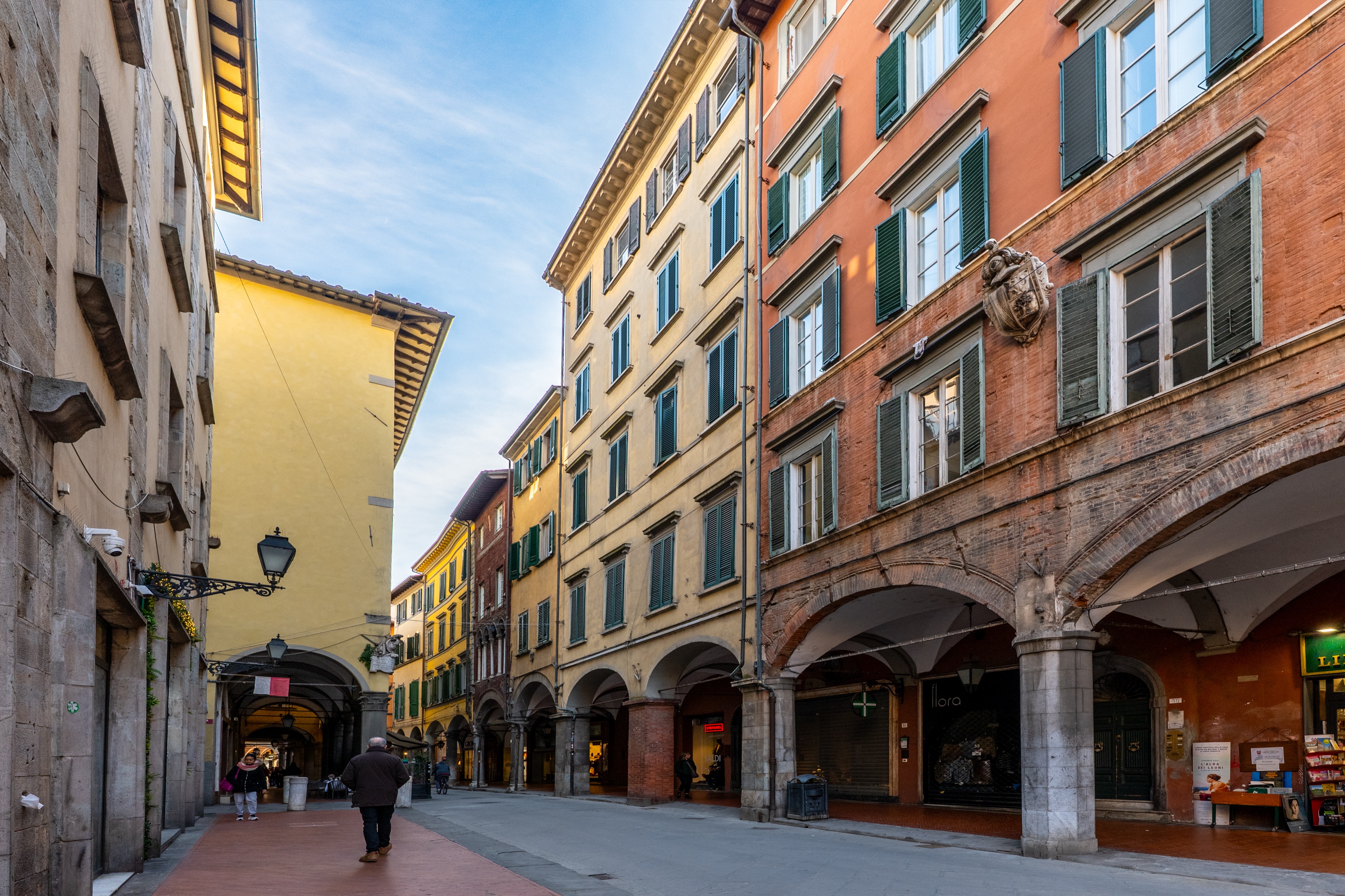
More than just a pedestrian street, Corso Italia is where history, commerce, and everyday life converge in Pisa. Stretching from the railway station to the Lungarni—the elegant streets lining the Arno River—it runs through the historic districts of Sant’Antonio and San Martino, serving as a vital urban artery since the medieval period. The buildings that line the street, originally constructed in brick, have revealed traces of ancient metallurgical workshops, highlighting the area’s long-standing role as a center of production and trade.
The name “Corso Italia” is relatively recent. In earlier times, the street was known as Via del Carmine, named after the nearby church where Masaccio created his celebrated Polyptych in 1426. A panel from this masterpiece, depicting Saint Paul, is now preserved at the Museo Nazionale di San Matteo. Later, the street was renamed Via Vittorio Emanuele II in honor of Vittorio Emanuele II.
Today, Corso Italia offers a diverse array of shops and experiences: from fashion boutiques to jewelry stores, from perfumeries to bookshops, alongside restaurants, pastry shops, and pizzerias serving local specialties. Among these, one local specialty stands out: schiacciatina con la cecina, a beloved Pisan street food made from chickpea flour—perfect for a tasty break as you explore.
As you explore, don’t miss a hidden gem: Palazzo Vincenti, a medieval building restored in the 18th century, home to frescoes painted in 1928 by Galileo Chini, widely regarded as the father of Italian Liberty style.
2. Piazza XX Settembre: Logge dei Banchi
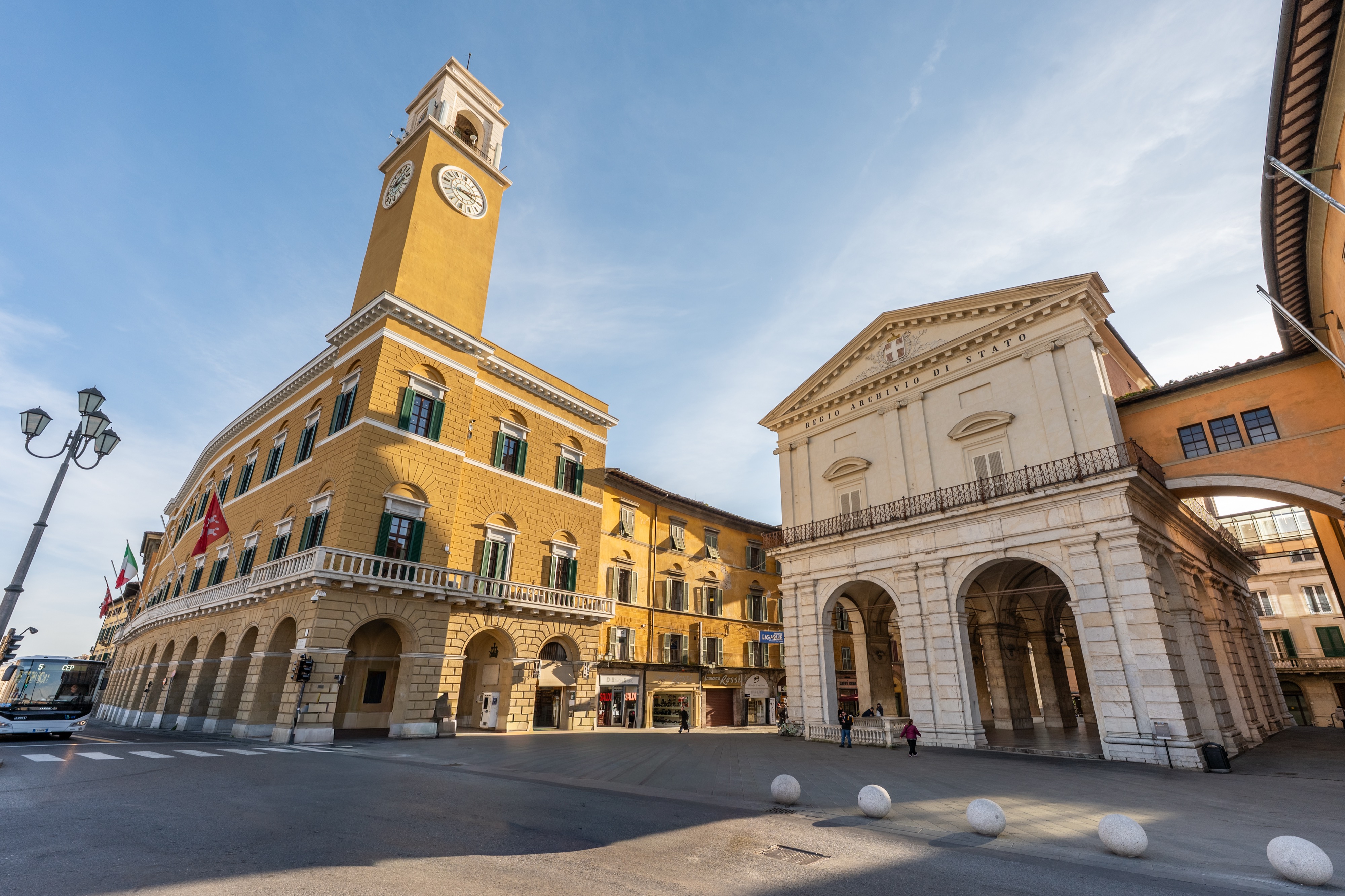
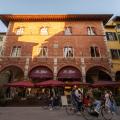
Walking along Corso Italia, you arrive at Piazza XX Settembre, home to the Logge dei Banchi - one of the most emblematic sites in the commercial and economic history of Pisa. Built between 1603 and 1605 to a design by Bernardo Buontalenti and commissioned by the Grand Duke of Tuscany Ferdinando I de' Medici, the Logge were conceived to house the wool and silk markets, two key sectors of the Pisan and Tuscan economy at the time.
During the Renaissance, the textile trade played a central role, with Pisa acting as a vital hub for the processing and exchange of both raw materials and finished goods destined for local and international markets.
The structure itself, defined by an elegant loggia supported by twelve stone pillars, served as a lively meeting place for merchants and artisans, as well as for money changers conducting their business.
3. Borgo Stretto: The Tabernacle of the Madonna dei Vetturini
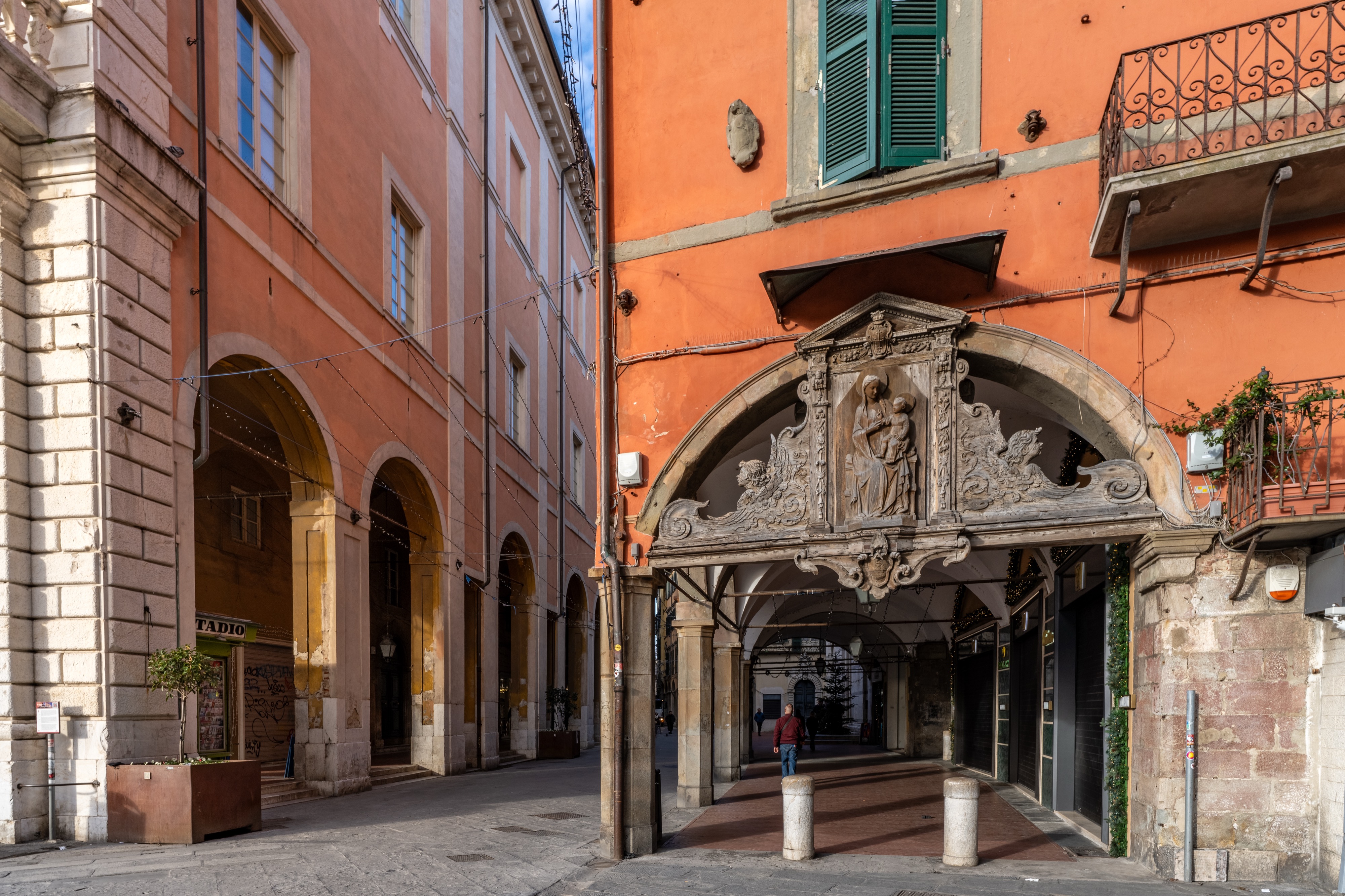
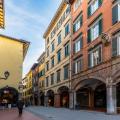
At the entrance to the arcades of Borgo Stretto stands a copy of the Madonna dei Vetturini, housed within a 16th-century wooden tabernacle. The original sculpture, attributed to Nino Pisano, was removed in 1982 to protect it from weathering and is now preserved at the Museo Nazionale di San Matteo.
Originally placed in the Church of Santa Maria della Spina, the sculpture was moved in 1586 beneath the arch overlooking Borgo Stretto, allowing citizens to offer prayers - particularly in response to the misrule of the time.
The tabernacle itself, crafted by the artisan Cosimo d'Arrigo, is a notable example of urban devotional art. The original 14th-century work is distinguished by stylistic references to the painting of Simone Martini and to medieval French sculpture, reflecting the rich artistic exchanges of the period.
4. Galileo Galilei's birthplace
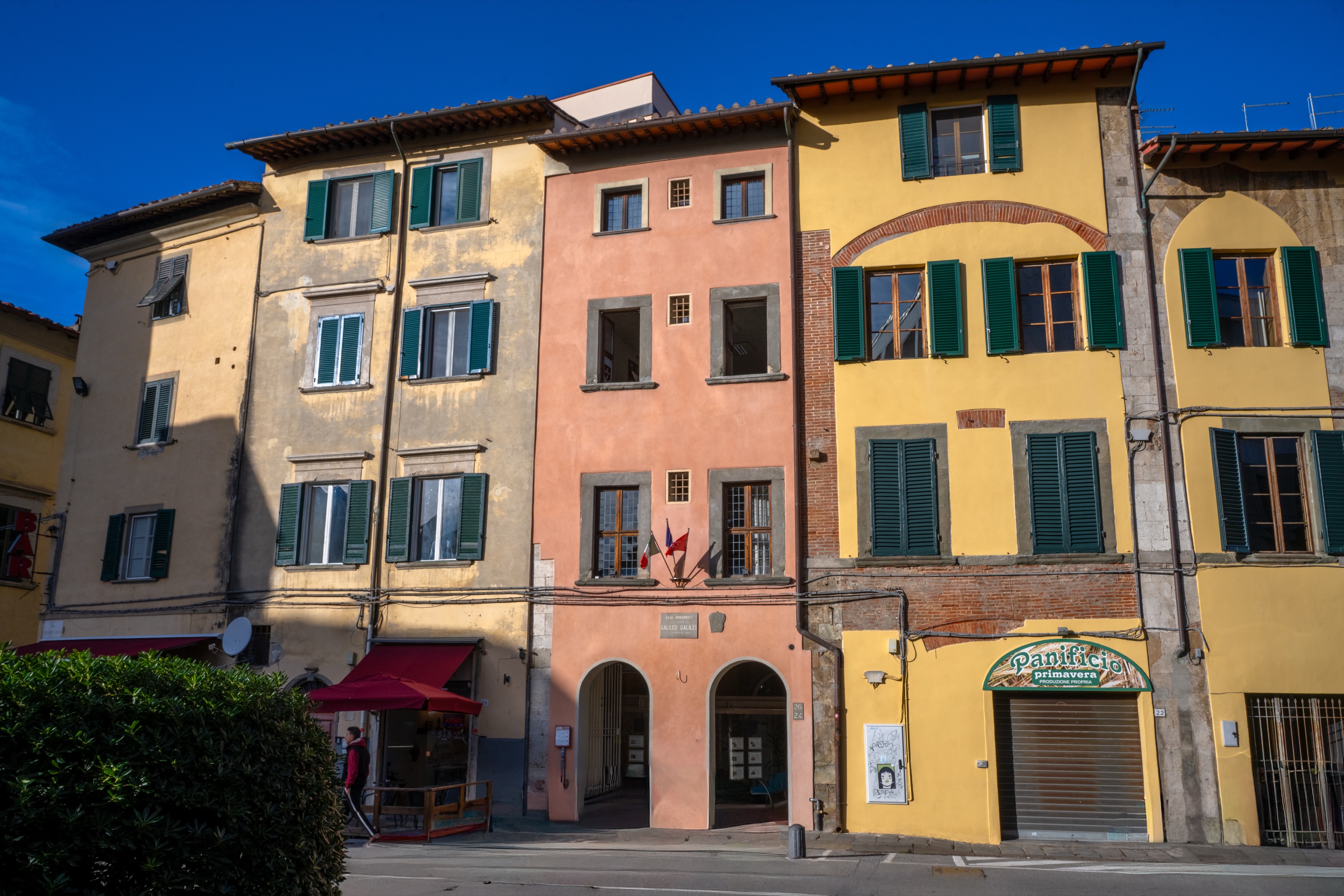
The house where Galileo Galilei was born lies near the Church of Sant’Andrea Forisportam in Pisa. For centuries, its exact location remained uncertain: it was once believed to be connected to the Church of Sant’Andrea in Chinzica, but more recent studies have established that Galileo was born on 15 February 1564 in the house of the Ammannati family, his maternal relatives.
Here, his mother Giulia was assisted by her aunt Dorotea and his grandmother Lucrezia, while his father Vincenzo and his uncle Leone were already considering the name of the newborn, who was later baptized in the Cathedral of Pisa.
As you stroll along Via Giuseppe Giusti, you are invited to imagine the early environment that shaped the life of the great Pisan scientist and the world he was born into.
5. Palazzo Poschi
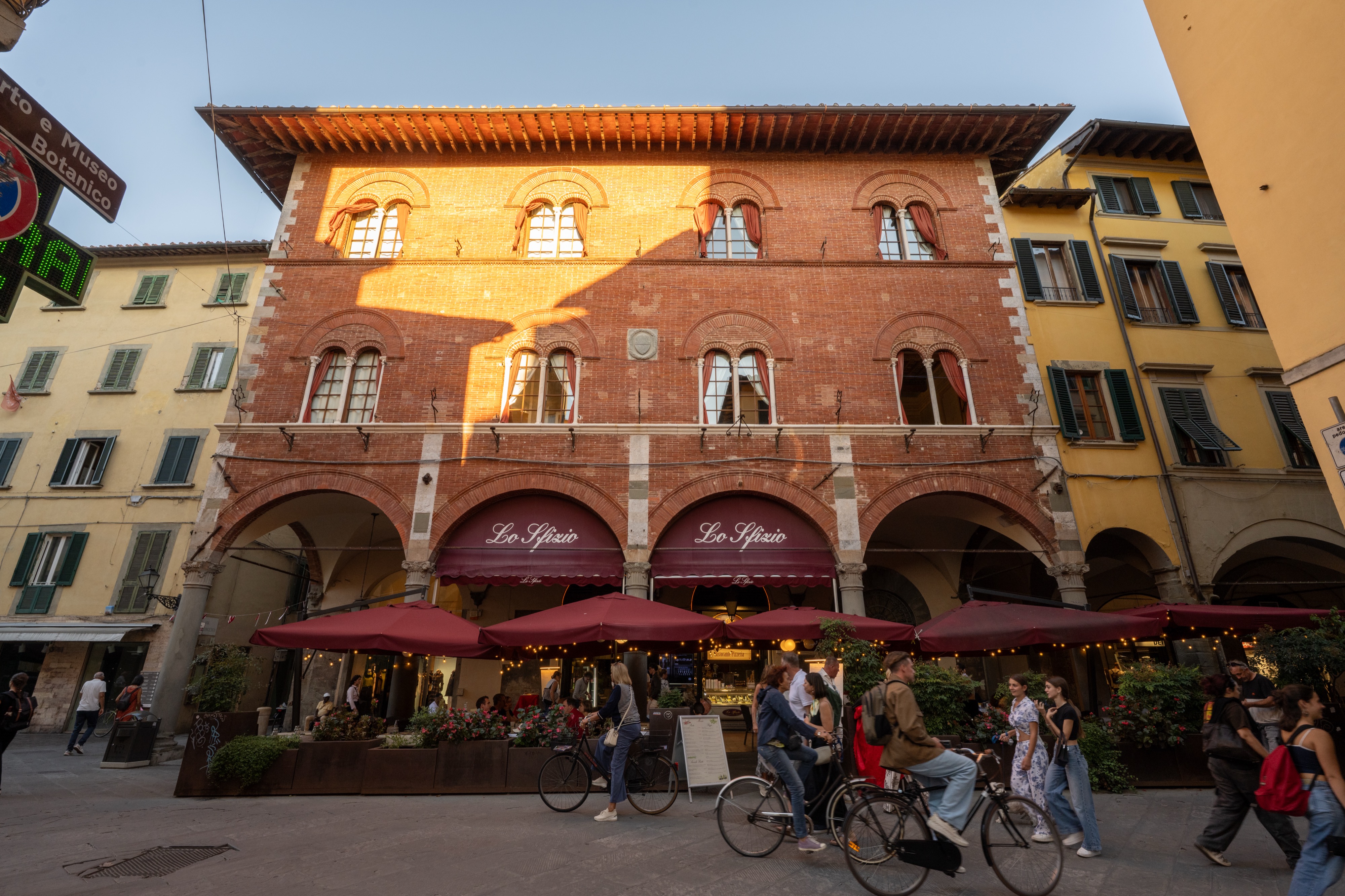
Continuing your stroll along Borgo Stretto, you will soon come across Palazzo Poschi, a building that originated from the merging of ancient 11th-century medieval towers.
The palace reached its full splendour in 1496, when the Poschi family completed its transformation into an elegant aristocratic residence. Its red-brick façade, enriched by refined mullioned windows (bifore) arranged across multiple levels, and the distinctive arcades embracing both the main street and the internal courtyard, transport visitors back in time, evoking the world of Pisa’s noble families and the city’s urban evolution.
The history of the palace is not without dramatic turns: from the decline of Ludovico Poschi, who was forced to flee Pisa in 1840 due to gambling debts, to its later acquisition by the noble Toscanelli family, who transformed it into a refined residence adorned with frescoes and decorative embellishments. lo trasformò in una raffinata residenza con affreschi e decorazioni.
6. Palazzo Tobler
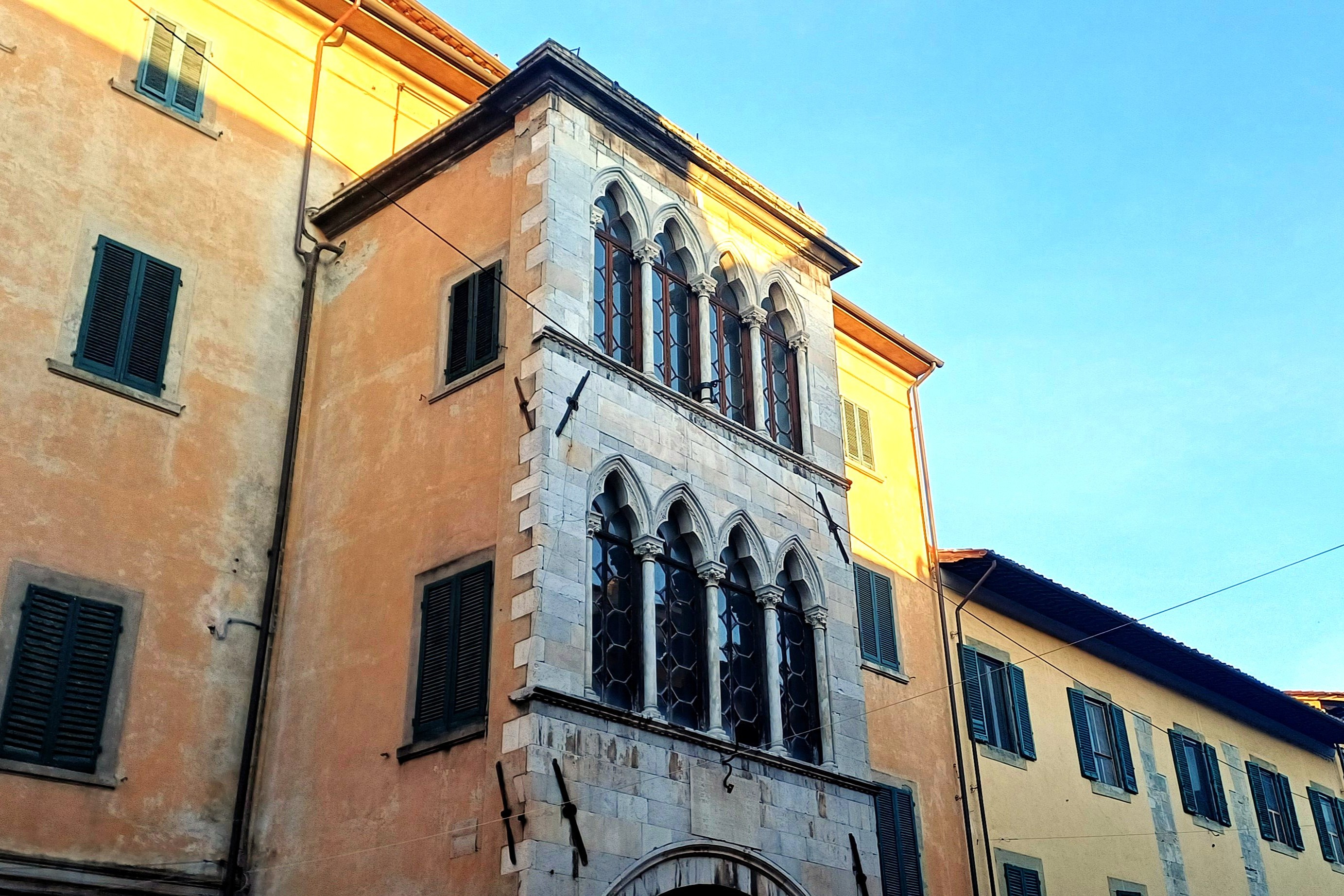
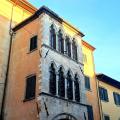
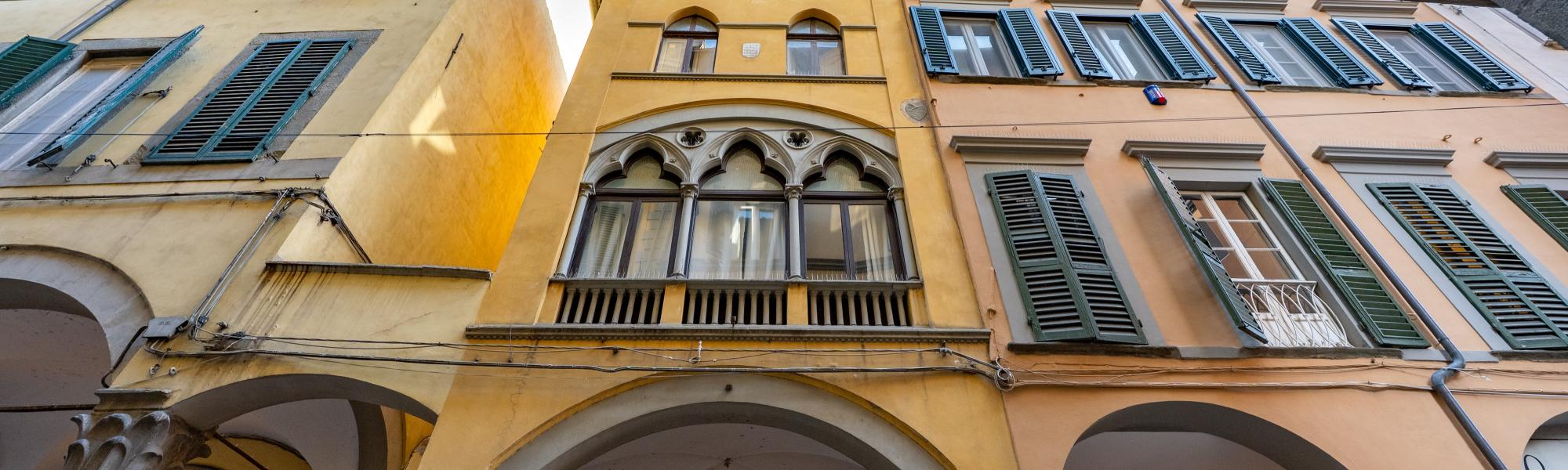
At Via Oberdan 41 take a moment to admire Palazzo Tobler. Its façade, dating back to the 15th century, immediately draws the eye with its portico supported by segmental arches and its elegant Gothic four-light windows (quadrifore), a refined example of the Pisan Gothic style.
At the rear of the building, you can still see the remains of medieval columns in Verrucano stone.
7. Borgo Stretto, 31
A few steps further along Borgo Stretto, you will come to a historic pharmacy. Founded in 1692 and transformed into a landmark of the city by Antonio Bottari in 1825, it soon became a meeting point for intellectuals and artists of the time, including the painter Carlo Markò. In gratitude for the pigments and walnut oil Bottari provided free of charge, Markò gifted the pharmacy a painting depicting Saint Ranieri in Palestine, which is still preserved today alongside a precious collection of white ceramic vessels.
The pharmacy is also known for its underground passage, built in 1862 to connect the laboratory to the main building.
Did you know? Antonio Bottari developed the “Sciroppo Vermicida”, an herbal preparation that became widely renowned in the second half of the 19th century for its perceived effectiveness and safety, particularly for children. The pharmacy was also famous for producing elixirs such as rhubarb and cinchona tonics, which were traditionally consumed on the premises in small glasses. After decades of interruption, the production of these elixirs has recently resumed, faithfully following the original recipes handed down through generations.
EXTRA: A break with cecina
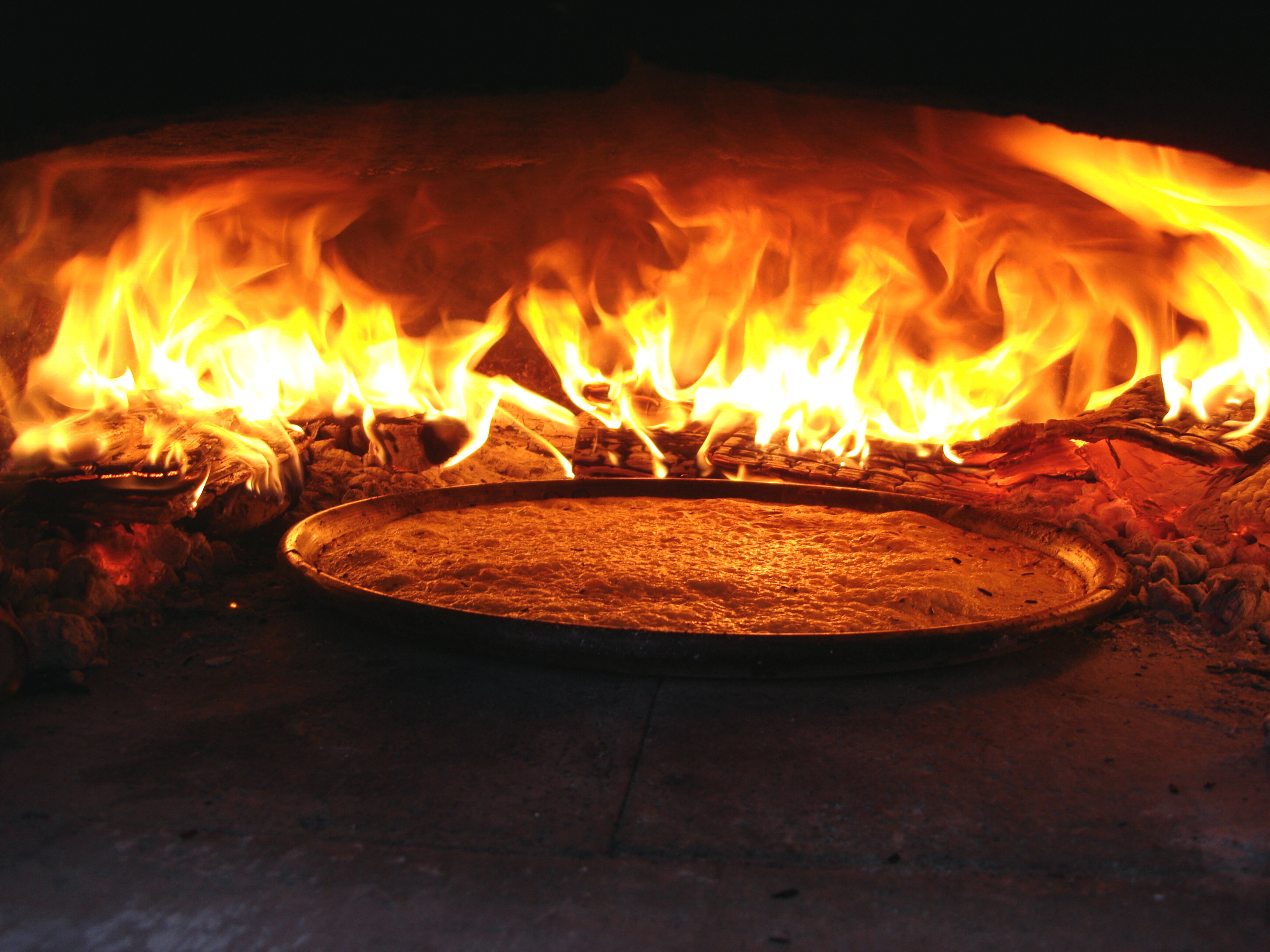
If walking has worked up your appetite, we have just the right solution. Whether for a light snack or a quick lunch, the area around Borgo Stretto offers a variety of cafés and pizzerias, including the oldest pizzeria in the city, inaugurated in 1800.
Here, you can also enjoy one of the most typical local specialties: cecina. This is a traditional, very thin savory chickpea cake made with chickpea flour, olive oil, water, and salt. Crisp on the outside and soft on the inside, it is best eaten fresh to fully appreciate its texture. It can be enjoyed on its own or tucked into a warm focaccia, ideally accompanied by a chilled blonde soda (spuma).