When: Spring, autumn
Ideal for: Couples, families, groups, solo visitors
How: On foot or by bike
Introduction
A journey through time across the 10 most iconic squares of the city.
1. Piazza Vittorio Emanuele II
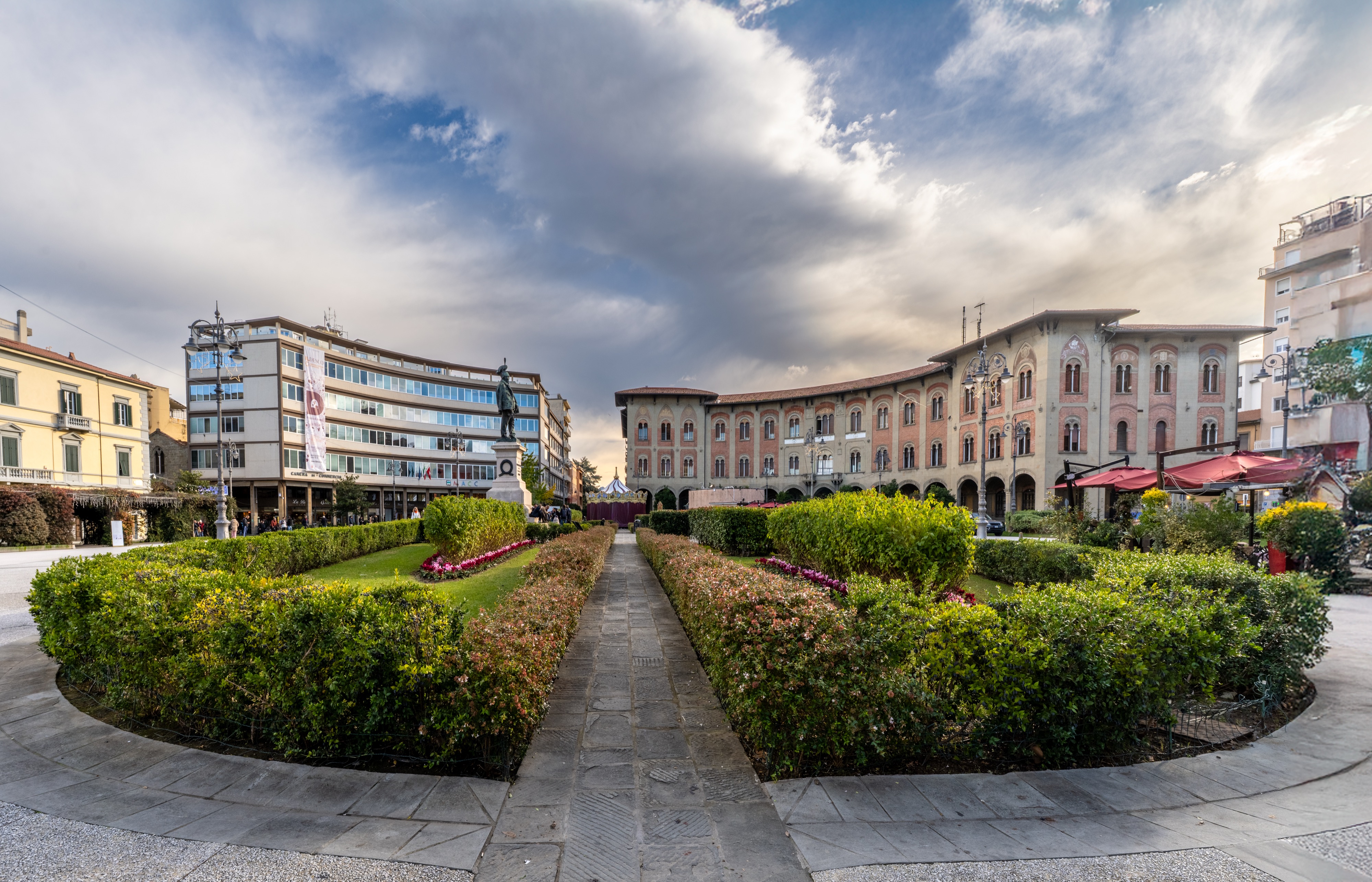
Located in the heart of Pisa, Piazza Vittorio Emanuele II is dominated by the statue of King Vittorio Emanuele II, by Cesare Zocchi, inaugurated on September 22, 1892, in the presence of King Umberto. The square stretches across the ancient medieval walls, and beneath its underground carpark lie the remains of the 12th-century Porta San Gilio and its drawbridge. Historic buildings, such as the Neo-Gothic Post Office Palace built in 1929, overlook the square, adding to its architectural charm.
Thanks to its central location and proximity to Pisa Centrale Station, the square is a perfect starting point for exploring the city’s many itineraries.
2. Piazza Chiara Gambacorti
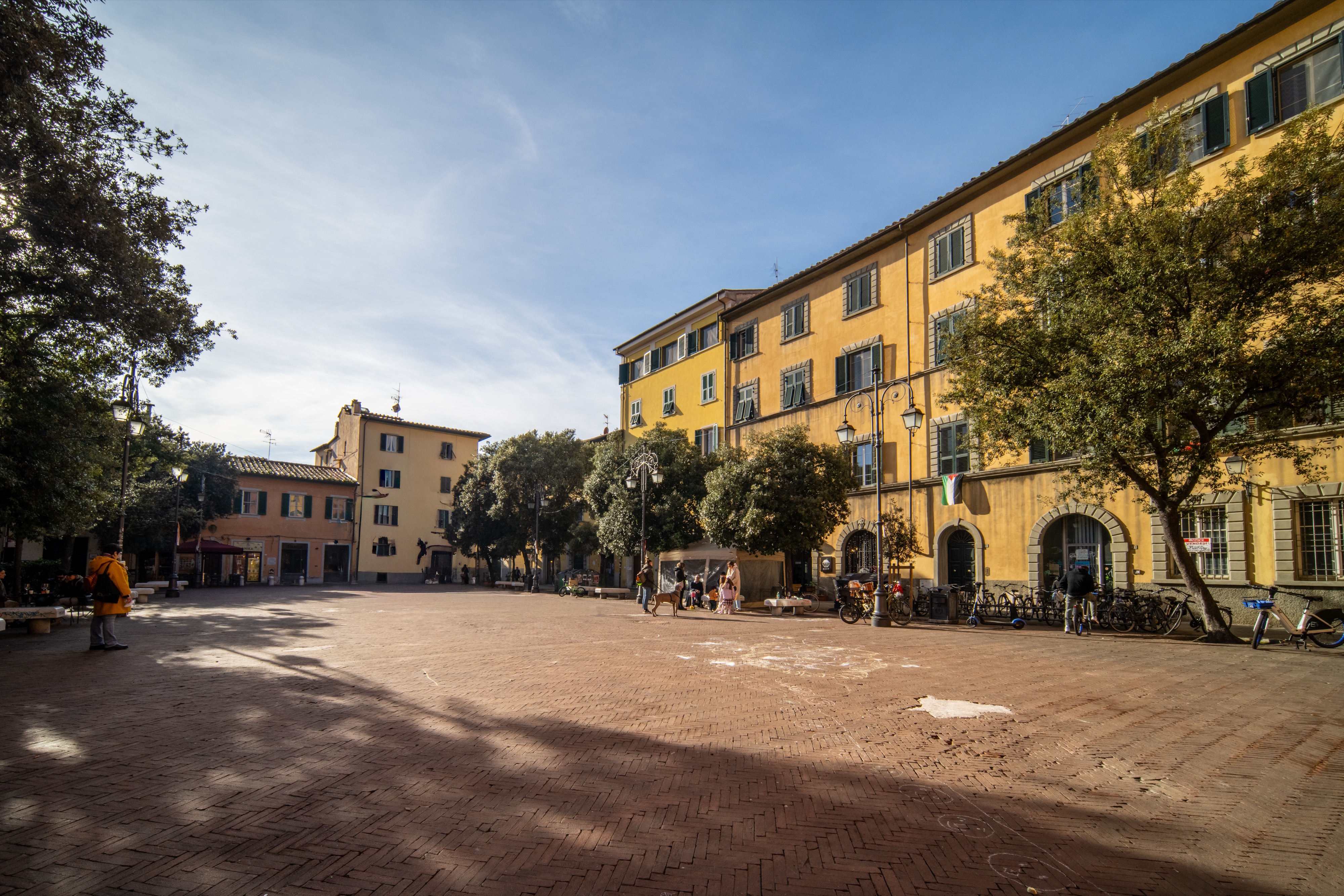
Locally known as “Piazza della Pera” (Pear Square) for an ancient Etruscan stone pillar shaped like a pear at the corner of Via S. Martino, Piazza Gambacorti is steeped in history.
In 2004, archaeological excavations uncovered the remains of the Church of St. Lorenzo in Chinzica, originally built in the 12th century and demolished in 1932. Commissioned by a wealthy Pisan family, the church featured three naves and covered 300 square meters, with its façade facing Via S. Lorenzino. Over the centuries, it was repeatedly restored due to fires and floods of the Arno River, until it was deconsecrated in 1784.
Later converted into a civic building, the site also housed waste disposal structures used until 1900. The artifacts recovered from these “bottini” revealed fascinating details about the daily life and dietary habits of Pisa’s residents. Thanks to these excavations, the long and layered history of Piazza Gambacorti - from the Middle Ages to today - has been brought vividly back to life.
3. Piazza XX Settembre
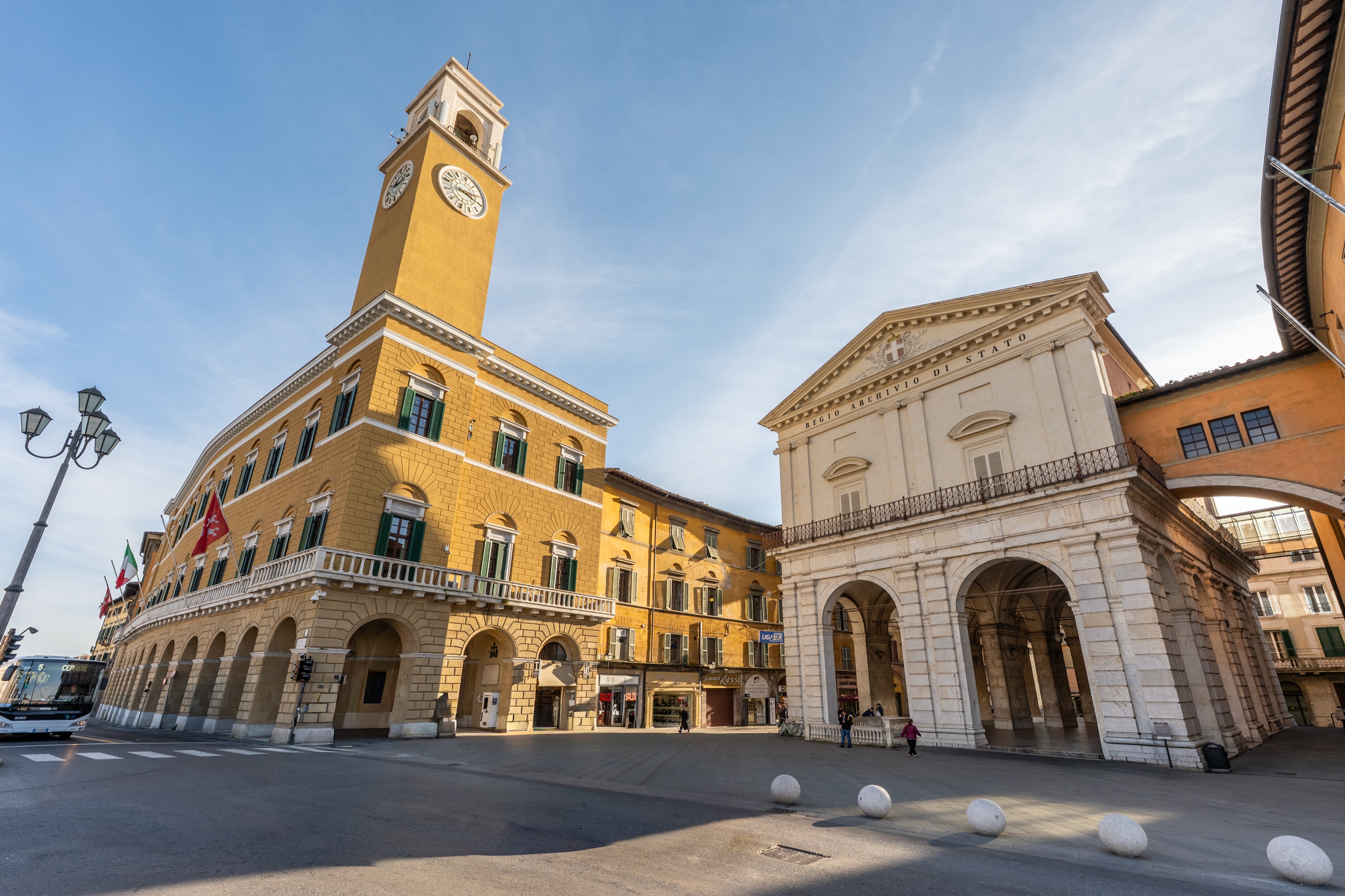
Walking along Corso Italia, you will arrive at Piazza XX Settembre, home to Pisa’s City Hall. Dominating the square are the Logge dei Banchi, built between 1603 and 1605 to a design by Bernardo Buontalenti, under the commission of Ferdinand I de’ Medici, Grand Duke of Tuscany. Originally, the loggia hosted the wool and silk market, money exchange offices, and later the grain market.
The loggia was constructed by demolishing part of the medieval district, and today only the first row of arches remains, formed by 12 pillars.
In 1925, an agreement between the Municipality of Pisa and the Bolognese entrepreneur Cleopatro Cobianchi led to the creation of a Liberty-style daytime bathhouse in this area, built by excavating a series of semi-underground rooms. During construction, a remarkable hoard of 13th-century gold coins was discovered, now preserved at the Museo di San Matteo. The bathhouse offered toilets, showers, bathtubs, a barber, manicure and pedicure services, and a laundry.
After decades of neglect, the structure was restored in 2000. Today, it is partially open to visitors, while other areas continue to serve public functions, including that of sanitary conveniences, blending history and modern life in the heart of Pisa.
4. Piazza Garibaldi
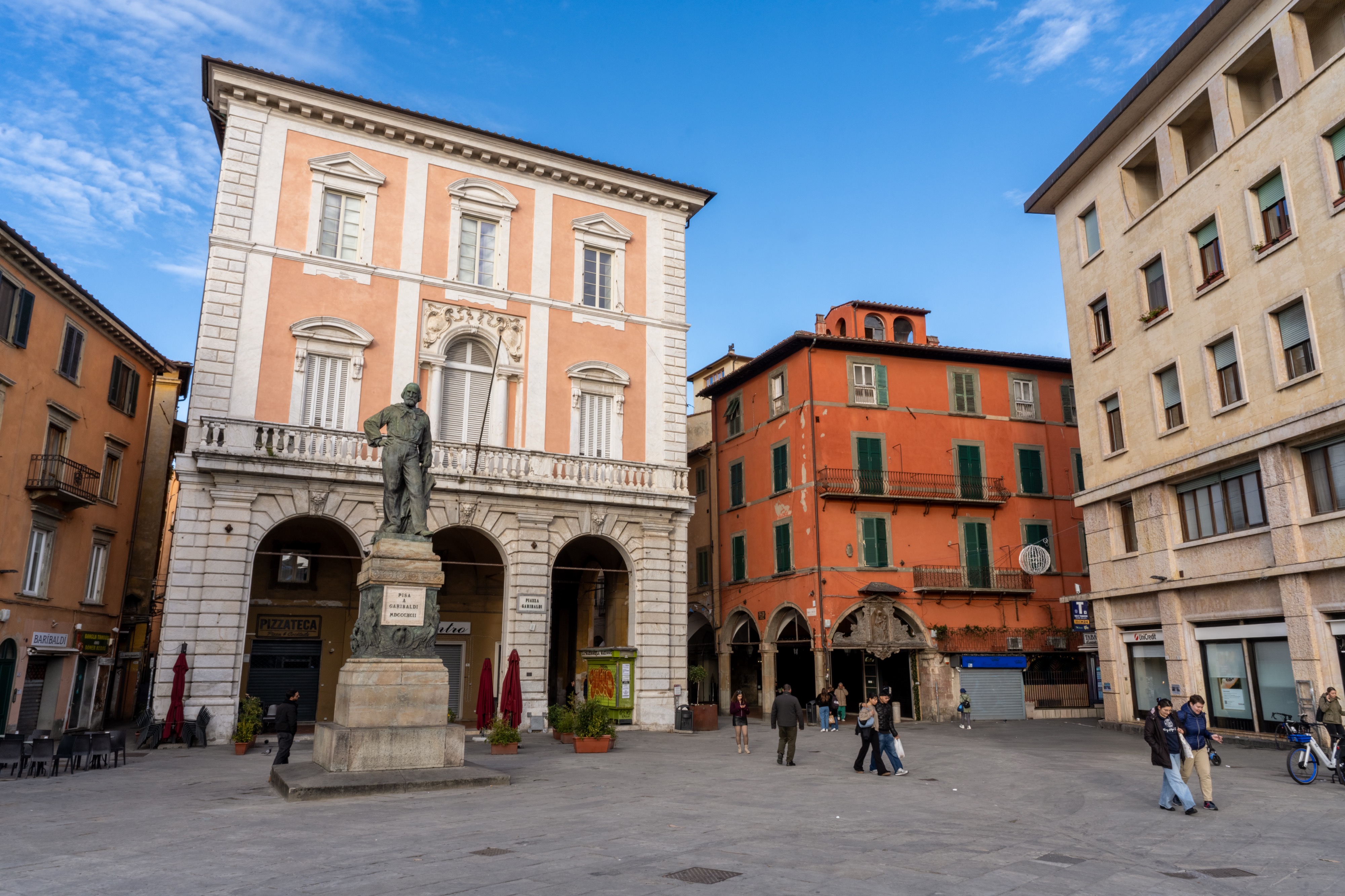
The square lies on the opposite side of Piazza XX Settembre and is reached by crossing the Ponte di Mezzo. Until the late 19th century, it was simply known as Piazza di Ponte di Mezzo.
At the corner with Borgo Stretto, you will spot the building that, from around 1750, housed the Casino dei Nobili, a social club for the recreational activities of Pisa’s aristocracy. Lining the square are historic buildings that once served as some of the city’s oldest hotels. To the west was the Locanda delle Tre Donzelle, which became the Grand Hotel de l’Arno in the 19th century and even hosted Van Lint’s photographic studio. On the opposite side stood the Hotel Europa.
Dominating the square is the bronze statue of Giuseppe Garibaldi, created in 1892 by Ettore Ferrari, a reminder of Italy’s unification and the city’s patriotic heritage.
5. Piazza Cairoli
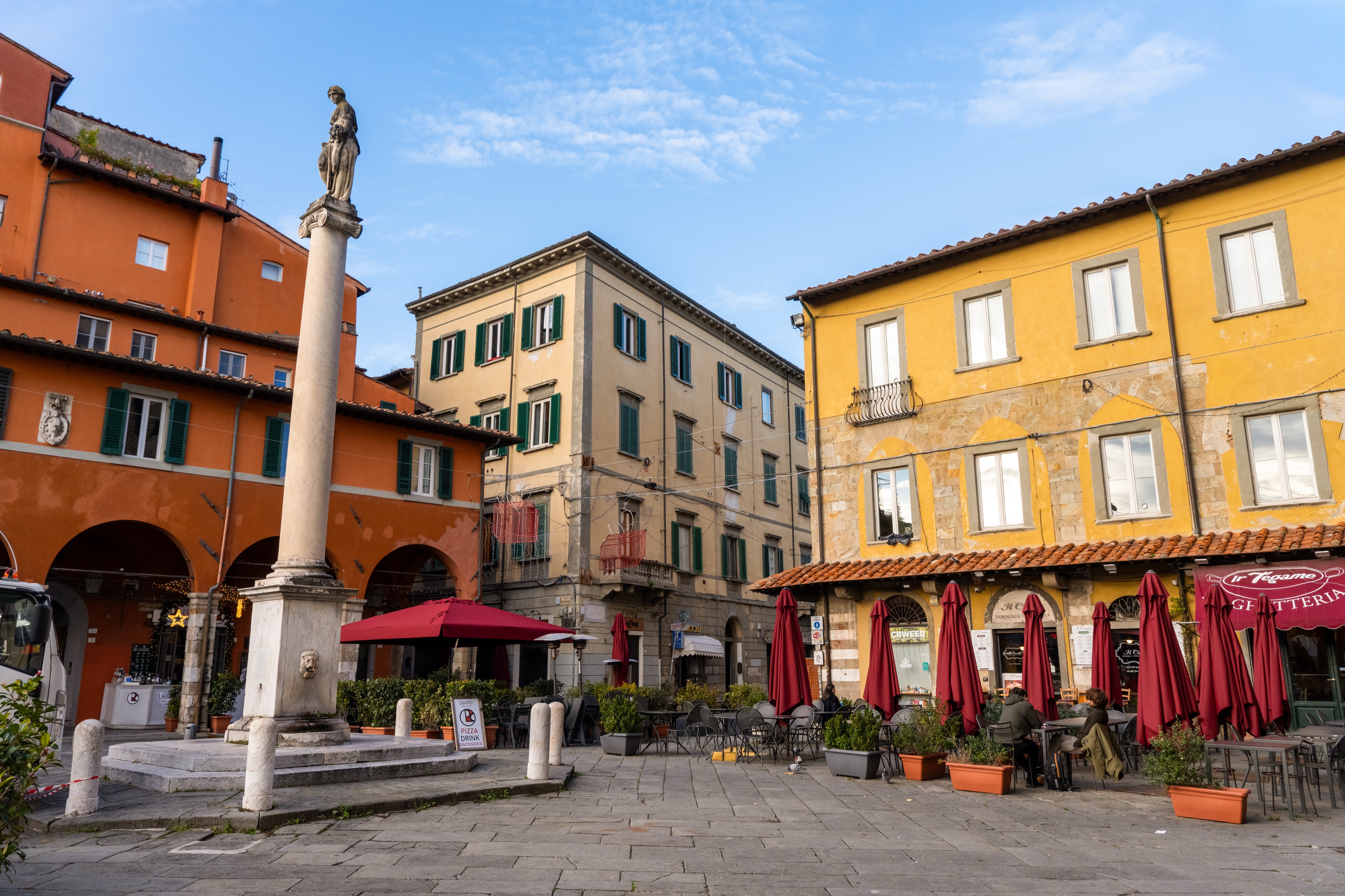
Built around the mid-16th century during the rule of Cosimo I de’ Medici, this square was designed by Giovan Battista Cervelliera, who had previously contributed to the construction of the Cathedral of Pisa.
Directly connected to the banks of the Arno, the square served as a lively market for fruit, vegetables, wine, fish, spices, and cheese, although grain was sold elsewhere, in Piazza delle Vettovaglie.
Interestingly, the square was once called “della Berlina,” as it also housed the public pillory, where minor offenders were punished. This role continued alongside the bustling market well into the modern period.
While you are here, take a moment to visit the Church of San Pietro in Vinculis, known as San Pierino, a gem of Pisan Romanesque architecture dating back to the Lombard era. Its underground crypt, with four naves and 14th-century frescoes, once served as a cemetery and preserves a Cosmatesque marble floor. For two centuries, it also safeguarded the Pandette Pisane, a collection of Roman laws commissioned by Justinian I, later transferred to Florence in 1406. The church is open, free of charge, on selected days, offering a glimpse into Pisa’s rich religious and civic history.
6. Piazza delle Vettovaglie
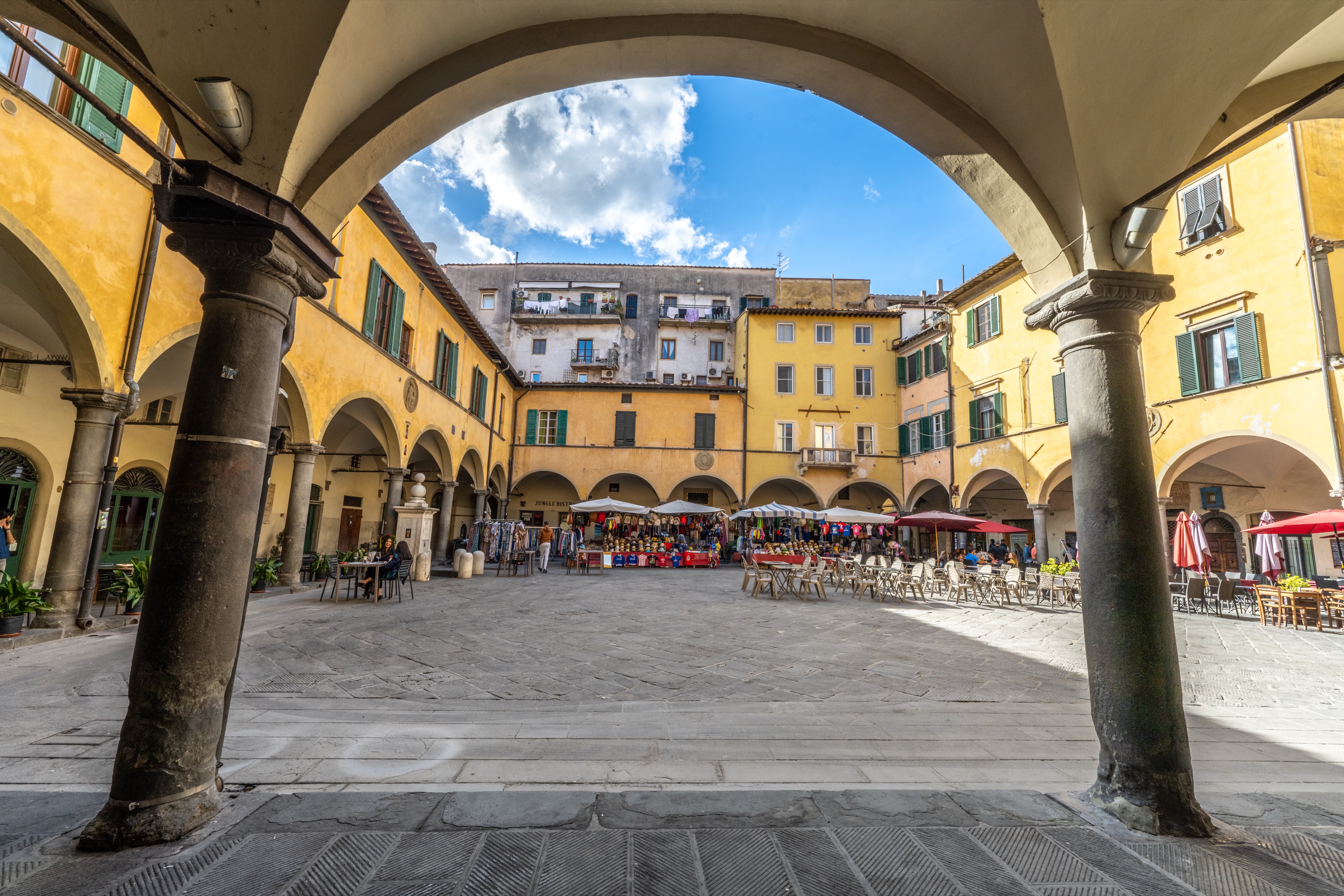
In the Middle Ages, this square was a vibrant neighborhood, home to noble residences, artisan workshops, and lively taverns. At its center was a small open space known as “Piassa de’ Porci”, dominated by a well that can now be seen thanks to archaeological excavations.
In 1493, the Opera del Duomo received permission to transform the area into a new “Piazza del Grano”, but local uprisings delayed the work. It wasn’t until 1543–1565, under Medici rule, that the square took its current shape: an irregular quadrilateral with a loggia of arches supported by sandstone columns, inspired by Florentine Renaissance style. By the 18th century, it had become the city’s hub for food trade, enhanced with a fountain and modern sanitation systems, cementing its role as the pulsating heart of Pisa.
Just a few steps away stands the Church of San Michele in Borgo, built atop an ancient temple dedicated to Mars. First documented in 1016 as a Benedictine monastery and later managed by the Camaldolese order, the church was heavily damaged by the 1846 earthquake and World War II bombings, yet still boasts a magnificent marble façade.
Nearby, Piazza Sant’Omobono is also worth exploring. Inhabited since Roman times, the area was once marshy, inspiring the name of the Church of San Pietro in Palude (1153). Its loggia hosted medieval public activities, while the surrounding area was a maze of tower houses with public wells. In 1614, the church was dedicated to Saint Homobonus, patron saint of tailors, but it was suppressed in 1785 and converted into a residence. Today, the medieval arches remain visible in the surrounding buildings, a silent witness to the area’s long and layered history.
7. Piazza Carrara
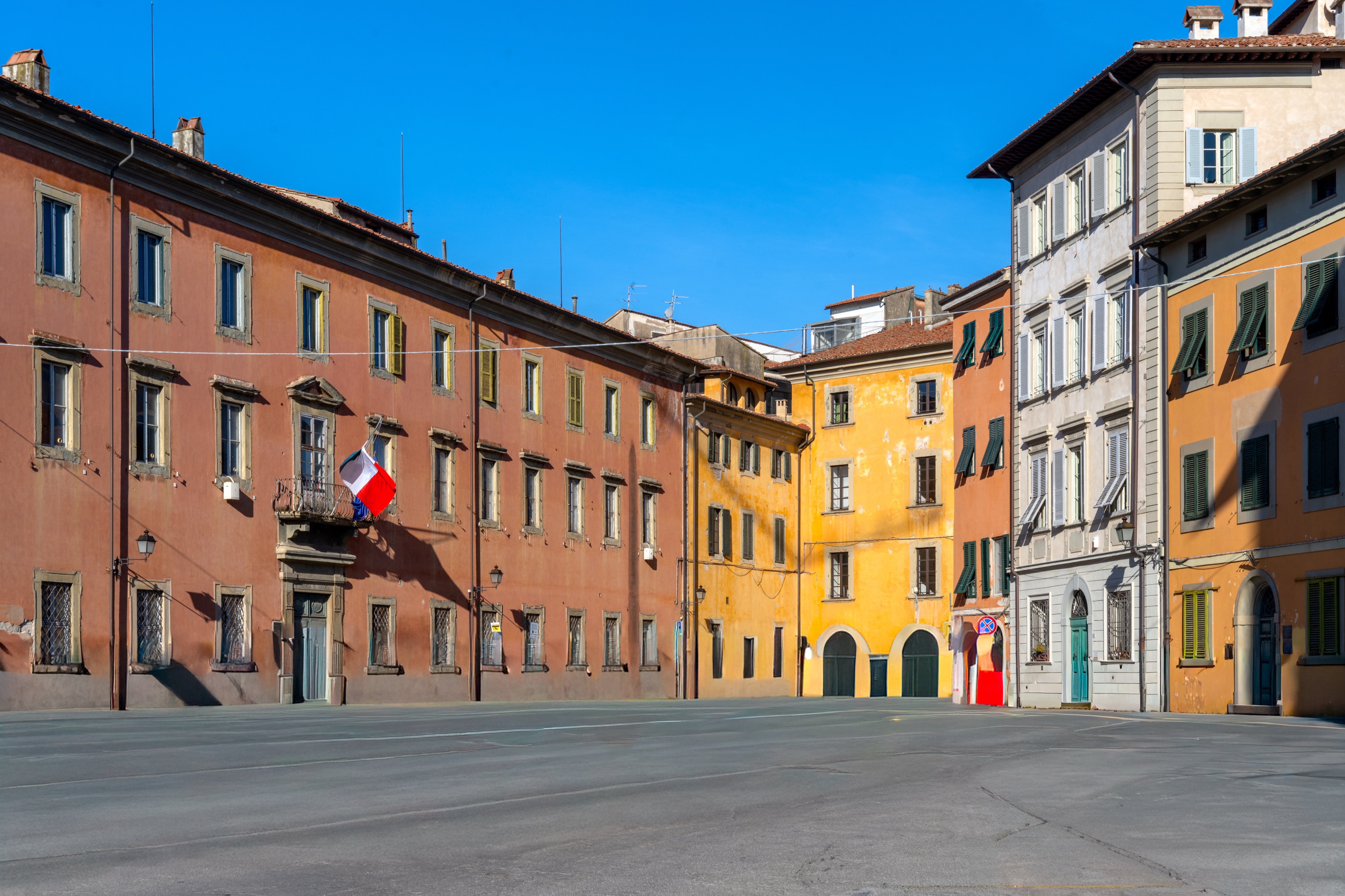
Originally a venue for "palla col bracciale", a popular ball game that drew crowds of enthusiastic spectators, this square later became a central hub of Pisa’s civic life thanks to renovations commissioned in the 18th century by Grand Duke Pietro Leopoldo of Lorraine. During this time, Pisa was elevated to the status of the second city of the Grand Duchy, and Piazza Carrara came to symbolize the presence and influence of the Grand Ducal court.
From here, follow Via San Nicola and turn right, and you will come face to face with the Church of San Nicola. Don’t miss its remarkable leaning bell tower, distinguished by its unusual octagonal shape - a true architectural curiosity in the heart of the city.
8. Piazza Dante
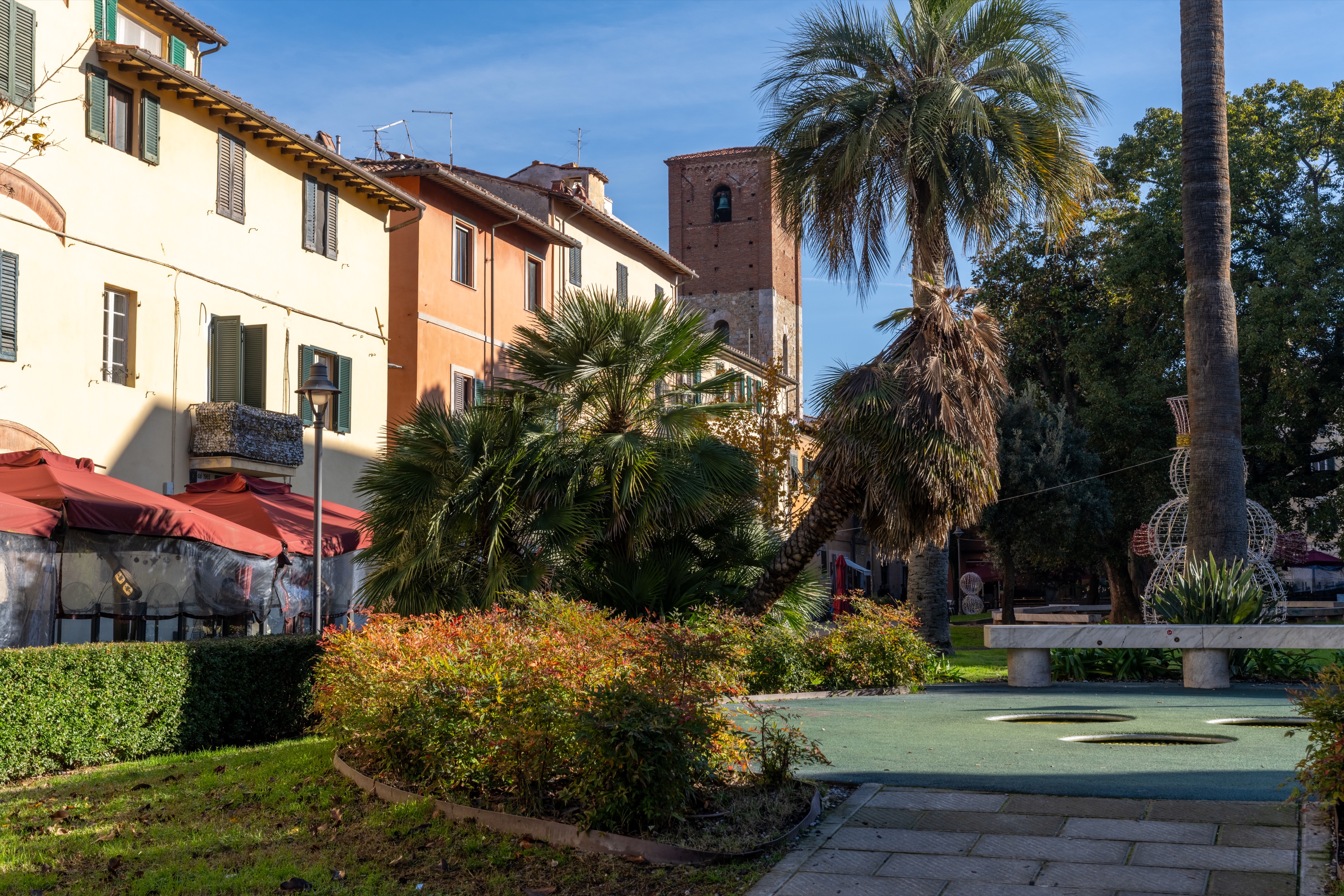
Nestled behind the Palazzo della Sapienza, Piazza Dante was established in the 14th century. Originally, it was a bustling market square known as Piazza del Grano, dedicated to trade and commerce. In the 15th century, during the period of Lorenzo the Magnificent, who relocated the university to this area, the square underwent a “transformation” to make way for the University Palace, while the commercial hub moved to Piazza delle Vettovaglie.
Today, the square is lively with students, who relax on benches or lie on the grass between classes, blending the city’s historic charm with the rhythms of contemporary university life.
Today, Piazza Dante is a vibrant meeting place for students. Between classes, they can be seen relaxing on benches or stretching out on the grass, infusing this historic corner of Pisa with the lively, youthful energy of contemporary university life.
9. Piazza dei Cavalieri
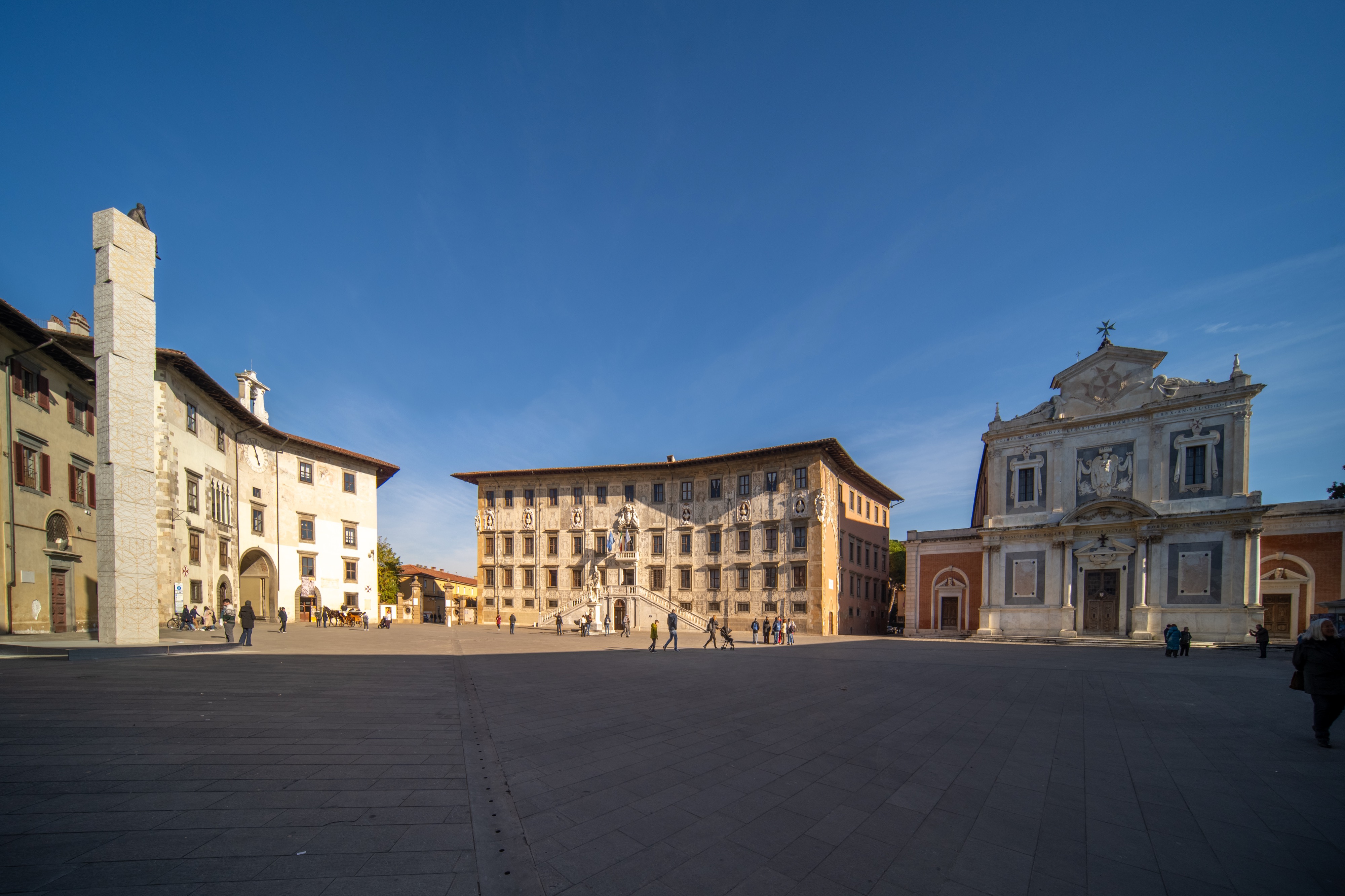
In the Middle Ages, this square was known as Piazza delle Sette Vie, named after the seven streets that converged here. Over the centuries, it became the stage for major historical events, including the tragic fate of Count Ugolino, forever immortalized by Dante in the Divine Comedy.
In the 16th century, Cosimo I de’ Medici entrusted Giorgio Vasari with transforming the square into the political heart of Medici power and the headquarters of the Order of the Knights of Saint Stephen. The result is the harmonious Renaissance setting you see today.
The square is framed by architectural masterpieces: the Palazzo della Carovana, decorated with elegant allegorical sgraffito and now home to the prestigious Scuola Normale Superiore; the Palazzo dell’Orologio, linked to the legend of Count Ugolino; the Palazzo della Canonica; and the Church of Santo Stefano dei Cavalieri, richly adorned with artworks connected to the Order’s maritime victories.
Standing here, you are not only in one of Pisa’s most beautiful squares, but at the very center of its political and cultural history.
10. Piazza dei Miracoli
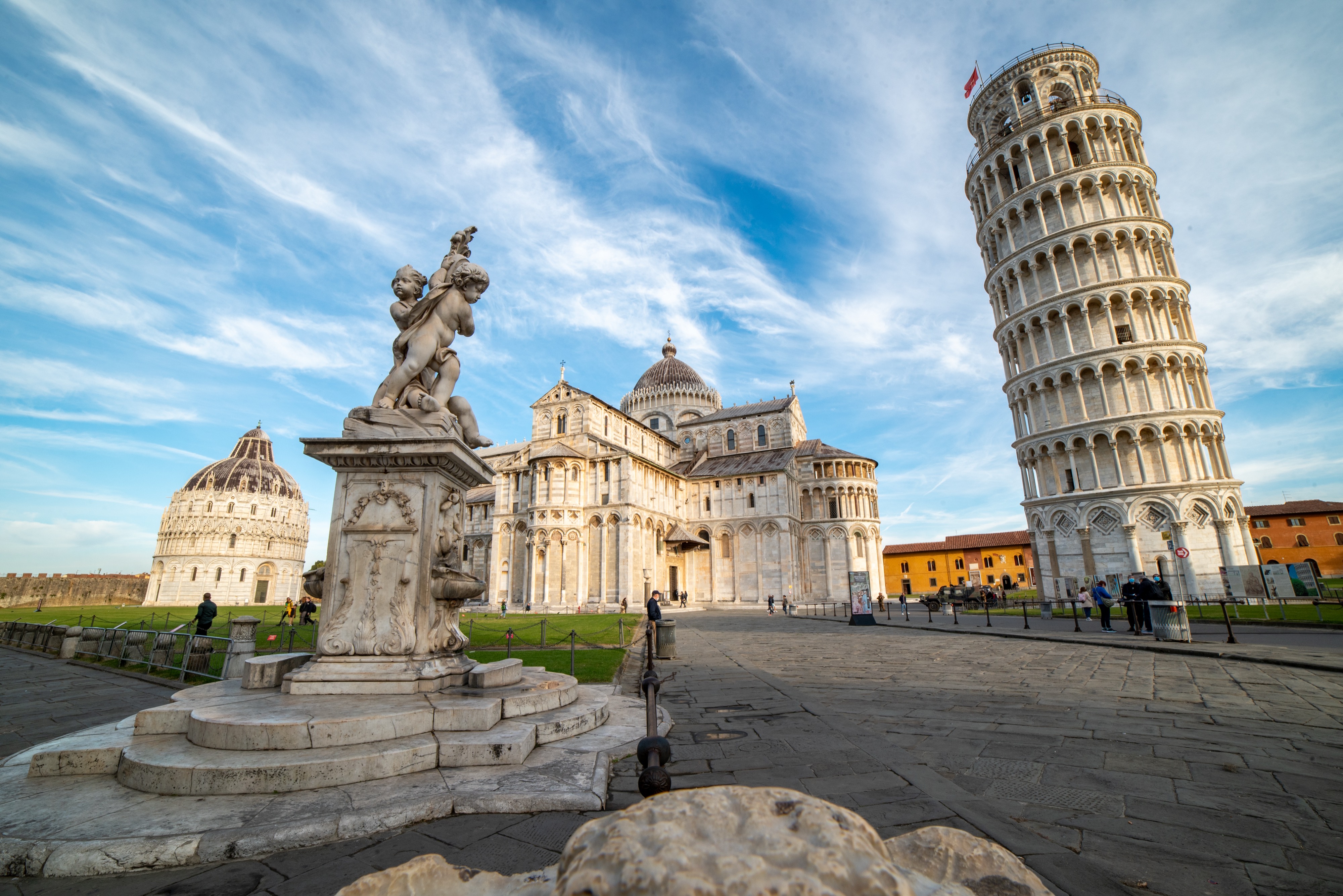
Piazza del Duomo, known around the world as Piazza dei Miracoli, is a place that seems to exist beyond time. Celebrated for its extraordinary beauty and profound historical and cultural significance, it embodies the artistic and spiritual greatness of Pisa. The evocative name “Field of Miracles,” coined by Gabriele D’Annunzio, perfectly captures the almost magical atmosphere of the square, where each monument reflects a different stage in the cycle of human life.
The Baptistery of San Giovanni, renowned for its remarkable acoustics and the Pulpit carved by Nicola Pisano, represents the beginning of the Christian journey. Nearby, the Cathedral of Santa Maria Assunta, begun in 1063, stands as a masterpiece of Pisan Romanesque architecture, enriched by Arab and Byzantine influences and adorned with works by masters such as Cimabue and Giovanni Pisano.
The Monumental Camposanto, with its powerful fresco cycles and Roman sarcophagi, is a place of remembrance and contemplation. Rising beside it, the world-famous Leaning Tower, originally built as the Cathedral’s bell tower, has become an enduring symbol of Pisa itself.
The Pisan Romanesque style, born in this very square, reflects the cultural dialogue between Pisa and the Mediterranean, visible in the alternating marble patterns and Arabesque details. A place where history and art merge. Born in this very square, the Pisan Romanesque style reveals the city’s deep cultural dialogue with the Mediterranean world, visible in its alternating marble façades and refined Arabesque details. Here, history and art blend seamlessly, creating a miracle of harmony that continues to inspire visitors from around the globe.
EXTRA: Piazza Martiri della libertà
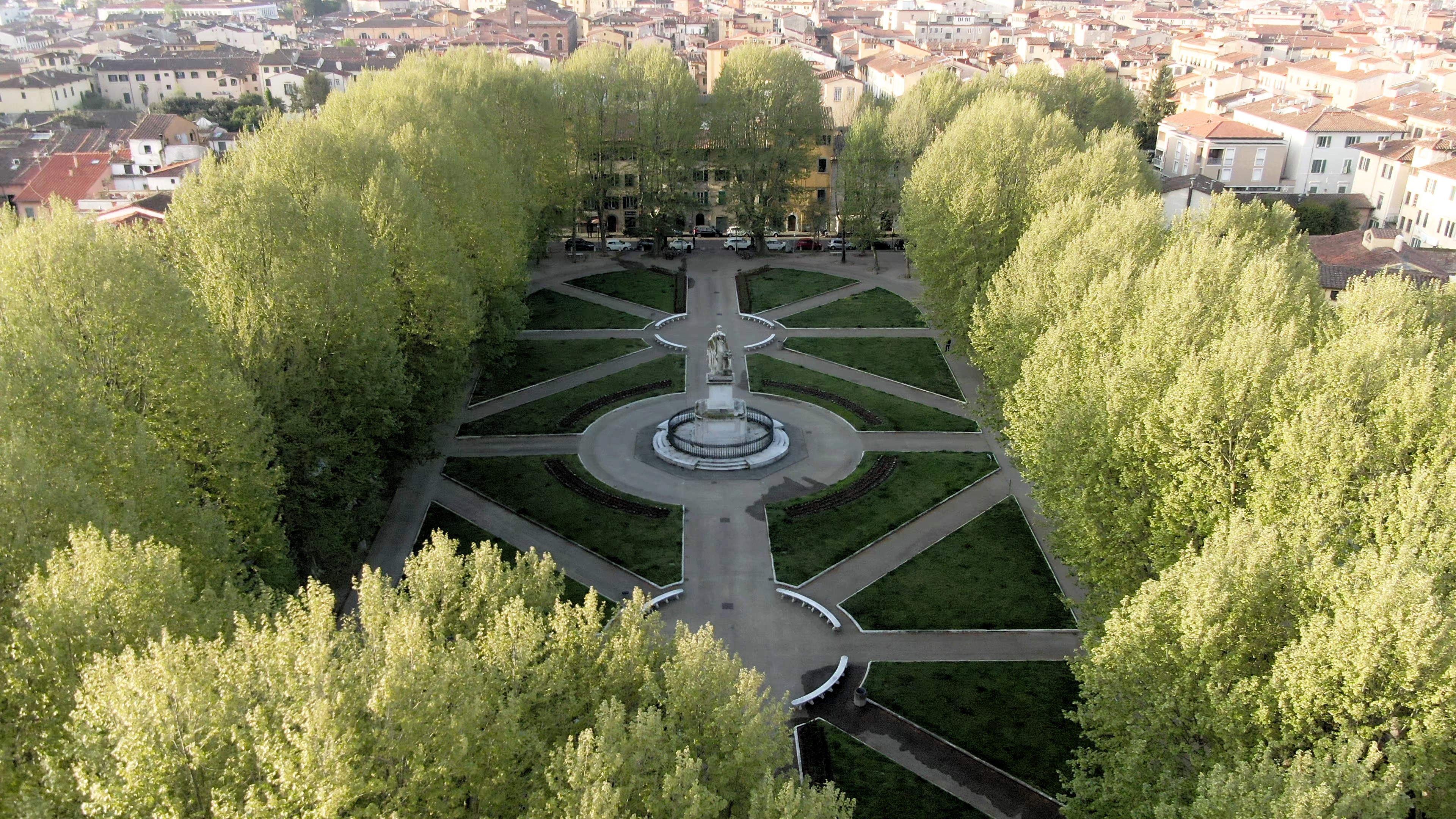
An eleventh stop on this itinerary is well worth adding: Piazza Martiri della Libertà.
Inaugurated in 1833 and also known as Piazza Santa Caterina, this elegant square is one of the most significant examples of Pisan urban planning from the Restoration era. It was designed by the architect Alessandro Gherardesca at the behest of Grand Duke Ferdinand III of Tuscany, embodying the aesthetic and functional ideals of the time. Its broad, pseudo-rectangular layout, framed by orderly rows of trees, creates a harmonious and balanced urban space. At its centre stands the statue of Leopold I (Pietro Leopoldo), completed in 1829, a reminder of the enlightened reforms associated with his rule.
In the Middle Ages, the area was known as civitate vetera due to the presence of Roman ruins. Today, the square is framed by buildings of great historical significance. On the northern side rises the former Monastery of Sant’Anna, now home to the prestigious Scuola Superiore Sant’Anna. To the east stand the 13th-century Church of Santa Caterina and the small Oratory of the Compagnia del Crocione, later transformed into a theatre hall.
The central space was once occupied by the Church of San Lorenzo alla Rivolta, together with its adjoining hospital and monastery, all demolished in the 19th century to make way for the present square. Before its urban redesign, this area was part of everyday city life - a place where washerwomen gathered to do their laundry and horses were trained.
Today, the square blends history, architecture and daily life, offering a deeply meaningful glimpse into Pisa’s layered past.


