When: spring, summer, autumn, winter
Ideal for: couples, families, groups, solo visitors
How: on foot, by bike, by car or by bus
Introduction
Step into the city of Galileo Galilei and experience a place where curiosity, discovery and innovation have shaped history. Pisa is far more than its iconic landmarks: it is a vibrant centre of scientific and technological excellence, brought to life by its prestigious universities. This itinerary invites you on a journey through culture and innovation - perfect for lovers of literature, history and science, as well as curious travellers of all ages.
Tip: Arriving by train at Pisa Centrale railway station? This itinerary has been carefully designed to guide you through the key places connected to the life of Galileo Galilei in Pisa. Begin your journey with a memorable photo stop at the striking new mural dedicated to the great Pisan scientist.
1. "Galileo Galilei" mural by Eduardo Kobra
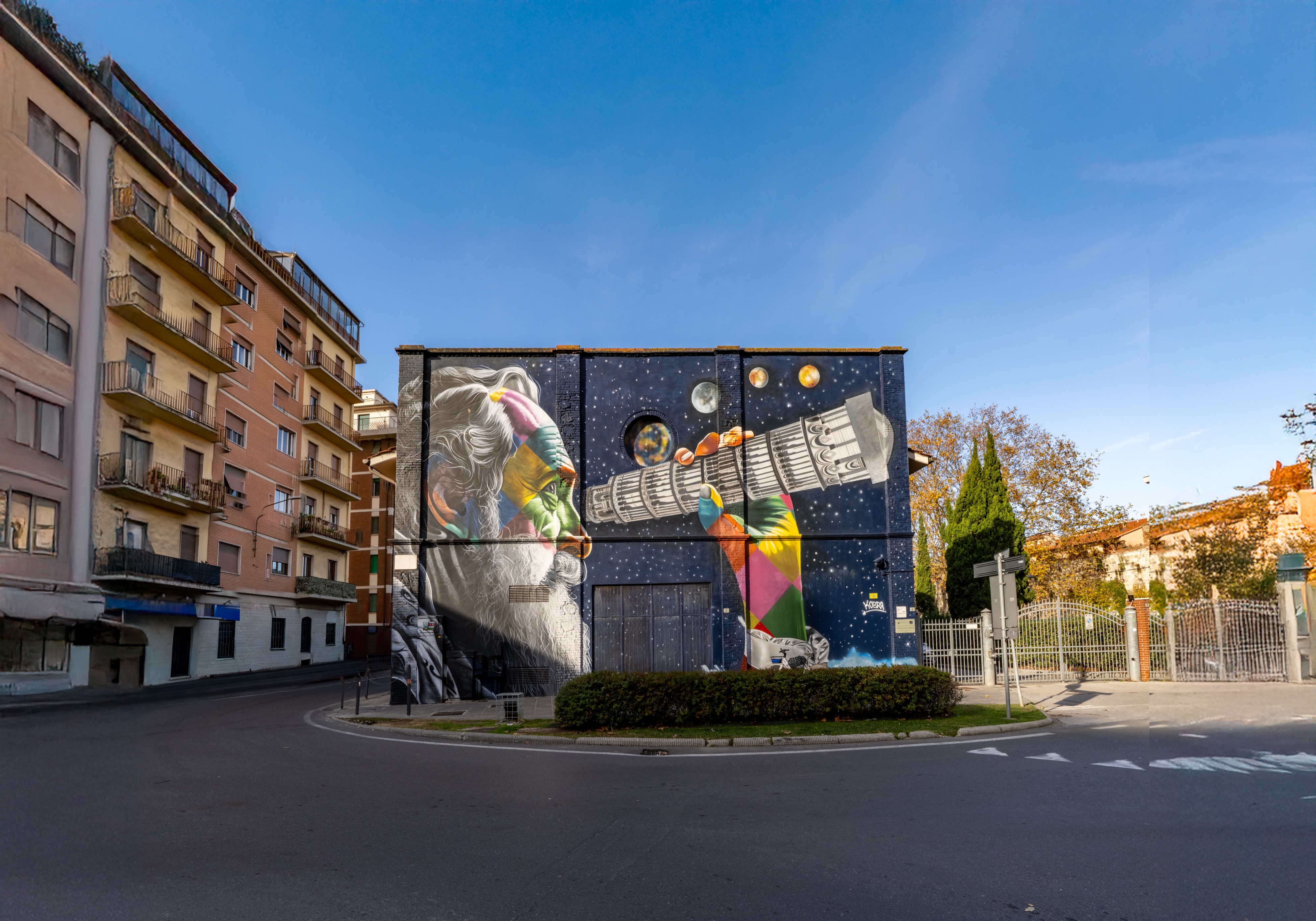
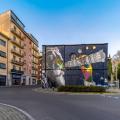
Your journey begins with a striking encounter between art and science. This extraordinary mural dedicated to Galileo Galilei, created by renowned Brazilian street artist Eduardo Kobra, stretches across more than 160 square metres, transforming an urban wall into a powerful tribute to scientific genius.
Kobra’s unmistakable style - vivid colours, bold geometries and dynamic composition - brings Galileo to life, portraying him with his flowing grey beard and a thoughtful, intense gaze that reflects the depth of his discoveries.
Even from a distance, a captivating detail stands out: the Leaning Tower of Pisa, the city’s most recognisable symbol, rests in Galileo’s hands and is reimagined as an astronomical telescope. This poetic vision celebrates not only the bond between the scientist and his hometown, but also his passion for exploring the cosmos - an endeavour that forever changed our understanding of the universe.
Take a moment to admire this remarkable work of urban art and capture the experience with a photograph. The journey then continues as you follow in Galileo’s footsteps to discover his birthplace.
2. Galileo Galilei's birthplace
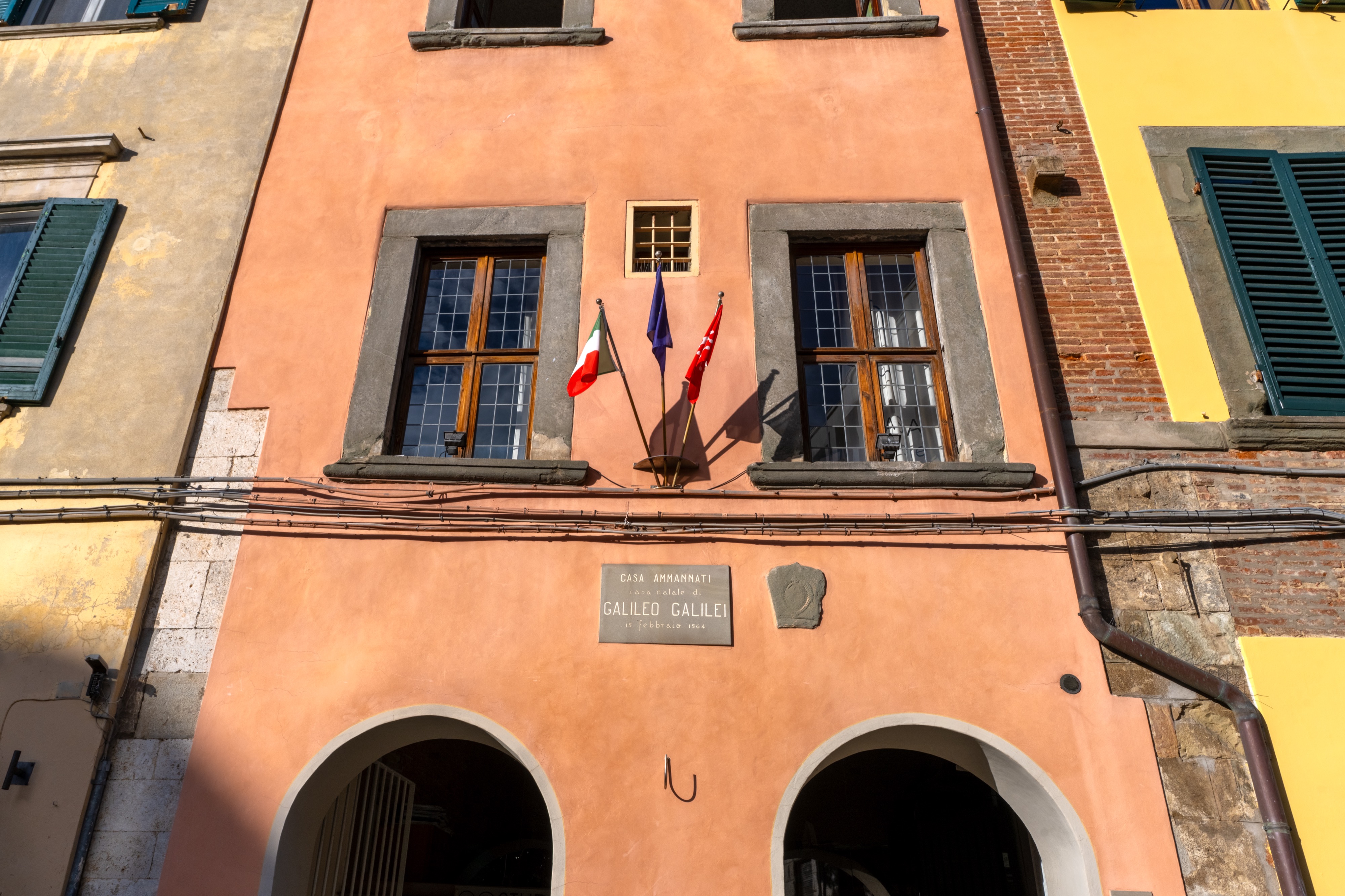
The exact location of Galileo Galilei’s birthplace has long been a matter of historical debate. Some theories once identified it with Casa Bocca, located at one of the corners of Borgo Stretto. Following archival research, scholars suggested it might have been near the little church of the Medici Fortress, Sant’Andrea in Chinzica. In subsequent centuries, further documents pointed instead to the house of Galileo’s grandparents, known as Casa degli Ammannati, located on Via Giusti.
The most plausible explanation for this historical puzzle lies in a misidentification of the church mentioned in the baptismal records. The document refers to a church of Sant’Andrea, but not the one in the Chinzica district - it was Sant’Andrea Foris Portam. This small but significant detail may have led to centuries of confusion regarding the exact location of Galileo’s birthplace.
Now, your journey continues: make your way towards the Torre de Cantone, ready to discover the next chapter of Galileo’s Pisa.
3. Torre de Cantone
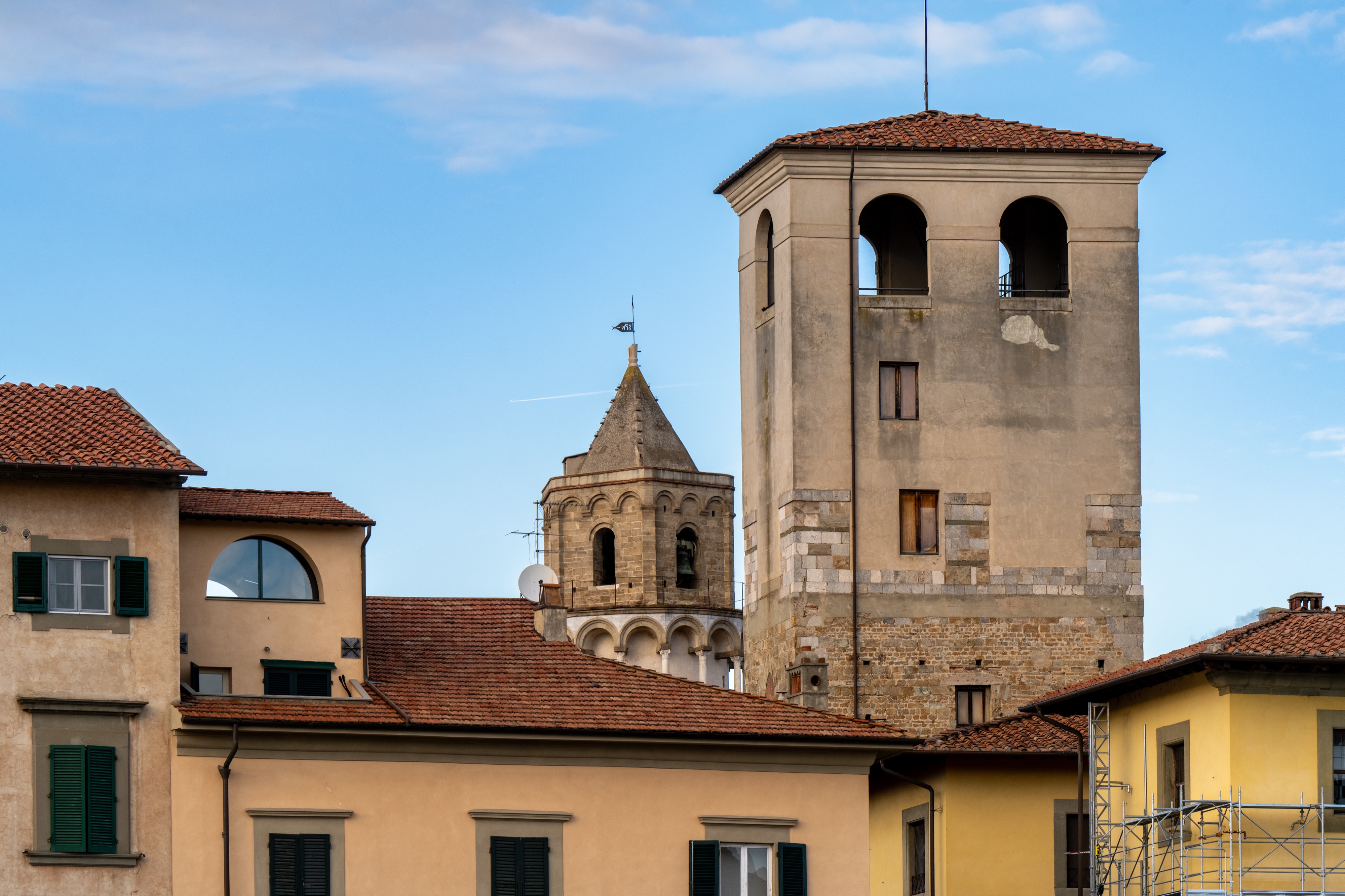
The Torre de Cantone is a remarkable remnant of the ancient Royal Palace, a residence that once hosted three great dynasties of Pisa: the Medici, the Lorraine and the Savoy.
Situated in one of Pisa’s most prestigious areas, the palace owes its current appearance to a major renovation commissioned by Francesco I de’ Medici. At the end of the sixteenth century, the Grand Duke decided to abandon the “Palazzo Vecchio” and establish a new residence along the banks of the Arno. The transformation was entrusted to the architect Bernardo Buontalenti, who converted the building into the elegant Grand Ducal Palace.
With the arrival of the Lorraine family, the complex was further expanded with three suspended bridges connecting it to the Church of San Nicola and the Palazzo delle Vedove. After the unification of Italy, the palace became the Savoy’s winter residence until 1919, when it was acquired by the State.
Among the original structures spared over the centuries is the Torre de Cantone, also known as the Torre della Verga d’Oro or Torre Gaetani. Tradition holds that it was from this very tower that Galileo Galilei once demonstrated the workings of his telescope to Grand Duke Cosimo II.
The tower received the name “de Cantone” in 1241, as it stood at the corner of the Church of San Nicola. Previously, it had been known as the “Domus dei Dodi” and housed an apotheca, a shop for everyday goods. The name “della Verga d’Oro” was later adopted in the nineteenth century, referencing another now-disappeared structure that once stood nearby at the south-east corner of Via Santa Maria.
Retrace your steps slightly along the street you have just walked, and continue your journey towards the Domus Galileiana.
4. Domus Galileiana
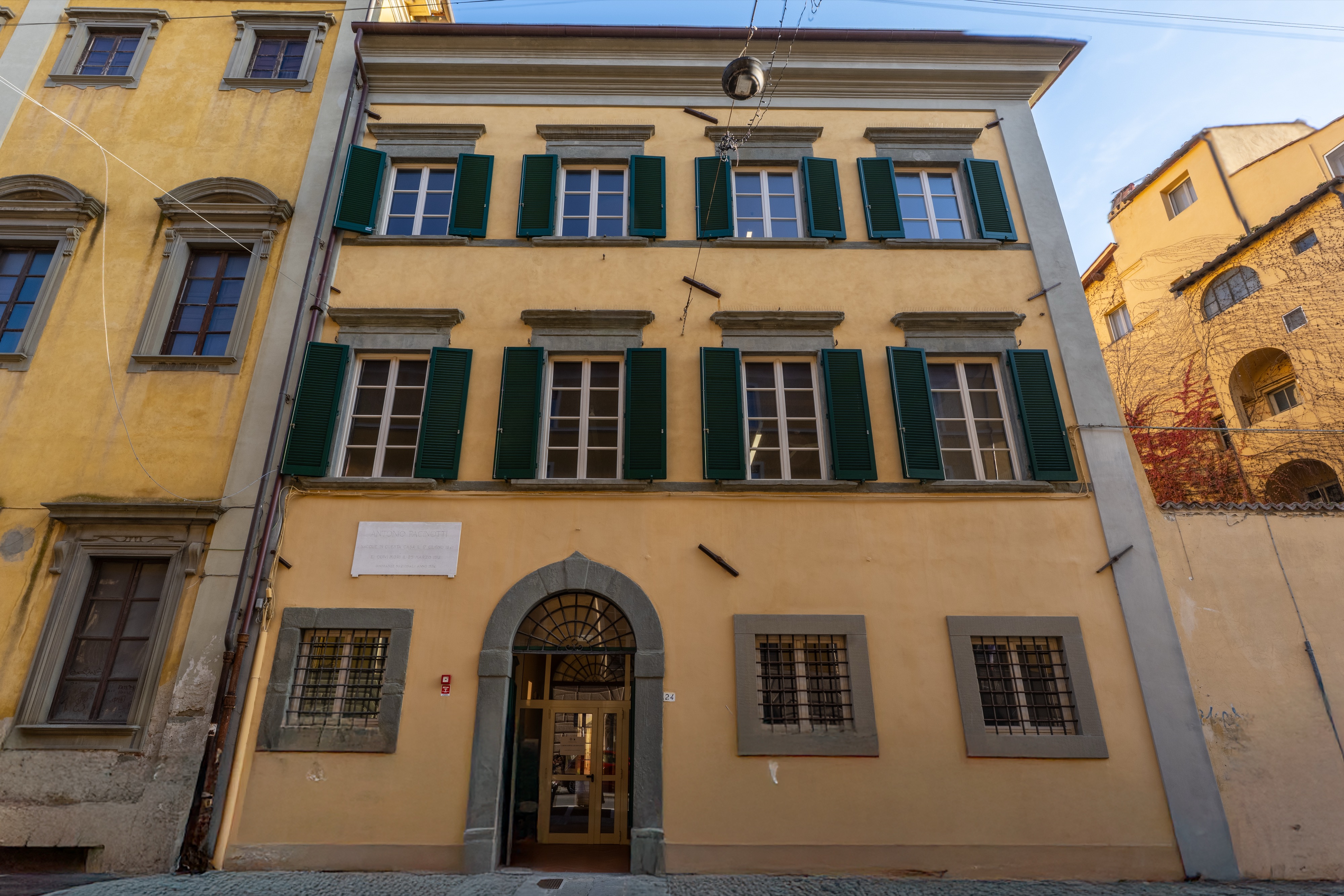
The idea of creating an institute dedicated to Galileo Galilei and the study of his scientific thought arose in preparation for the centenary celebrations of the First Meeting of Italian Scientists, held in Pisa in 1839. In 1941, the Domus Galileiana was officially established.
Today, the Domus preserves a collection of over 40,000 volumes and documents of immense historical and scientific value. Among its most precious treasures is an autographed letter by Galileo containing the first formulation of the law of falling objects (1604), the archive of Antonio Pacinotti, inventor of the dynamo and the electric motor, and materials belonging to renowned physicists such as Enrico Fermi and Ettore Majorana.
In the past, the building also housed part of the University Library and the Chemistry Cabinet.
5. Piazza dei Miracoli
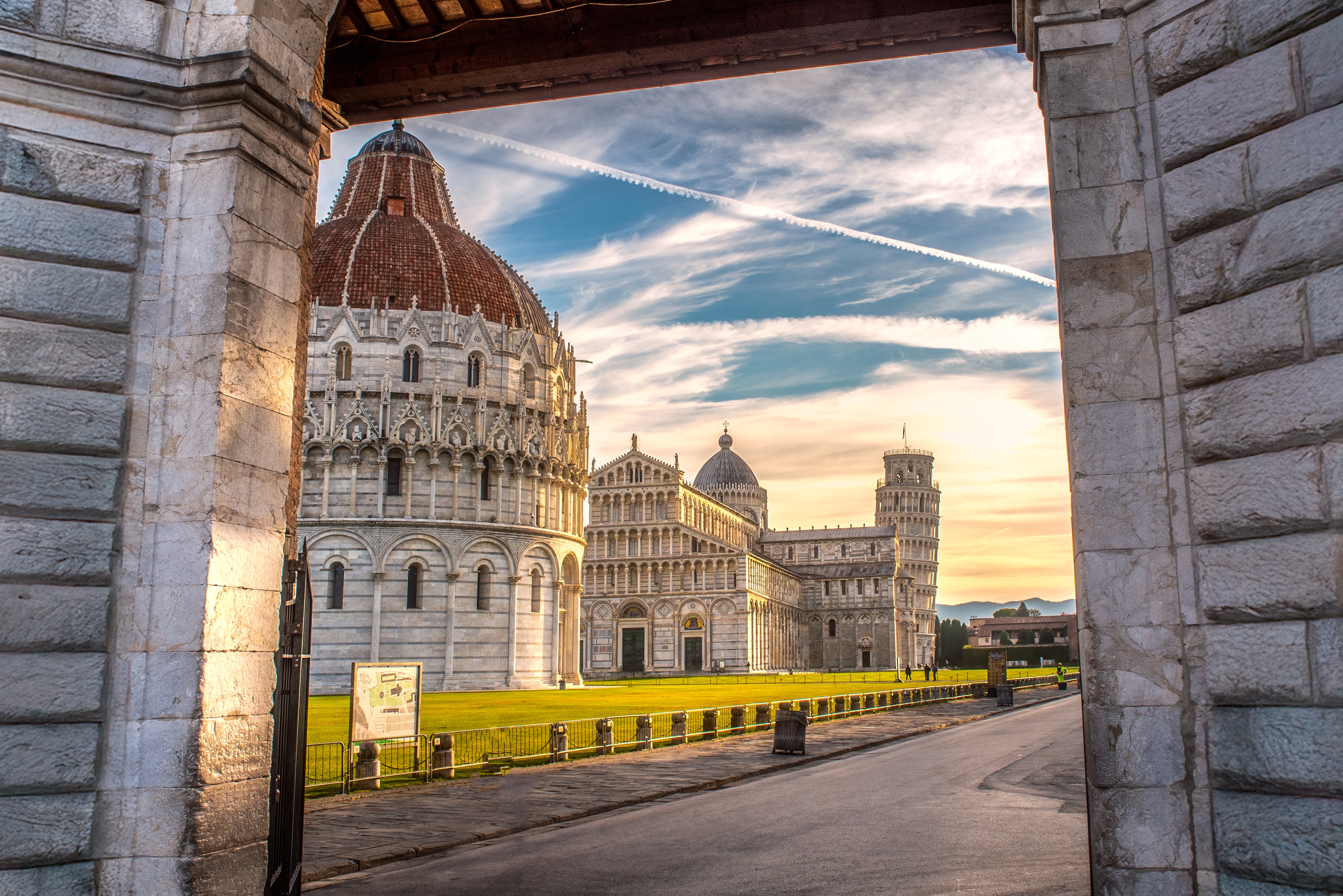
Pisa’s most famous square is home to some of the most celebrated monuments in Italy, Europe and the world. A UNESCO World Heritage Site since 1987, Piazza dei Miracoli is renowned not only for its extraordinary beauty but also for the profound historical and cultural significance it embodies.
The square earned its evocative name, “Prato dei Miracoli” (Meadow of Miracles), from the poet Gabriele D’Annunzio, who was captivated by the magnificence of this unique place.
The Baptistery of San Giovanni, with its perfect acoustics and the renowned pulpit sculpted by Nicola Pisano, symbolically marks the entrance to Christian spirituality. The Cathedral of Santa Maria Assunta, a masterpiece of Pisan Romanesque architecture enriched with Arab and Byzantine influences, houses works by great masters such as Cimabue and Giovanni Pisano. The Campo Santo Monumentale, adorned with frescoes and Roman sarcophagi, is a place of memory and art that tells centuries of history. Finally, the Leaning Tower, the Cathedral’s famous bell tower, is recognised worldwide for its characteristic tilt.
After admiring these extraordinary masterpieces of Italian art - and perhaps taking the iconic selfie with the Leaning Tower - you can continue your journey following in Galileo’s footsteps, exploring other sites that have shaped the history and culture of Pisa.
6. Museum of Physics Instruments
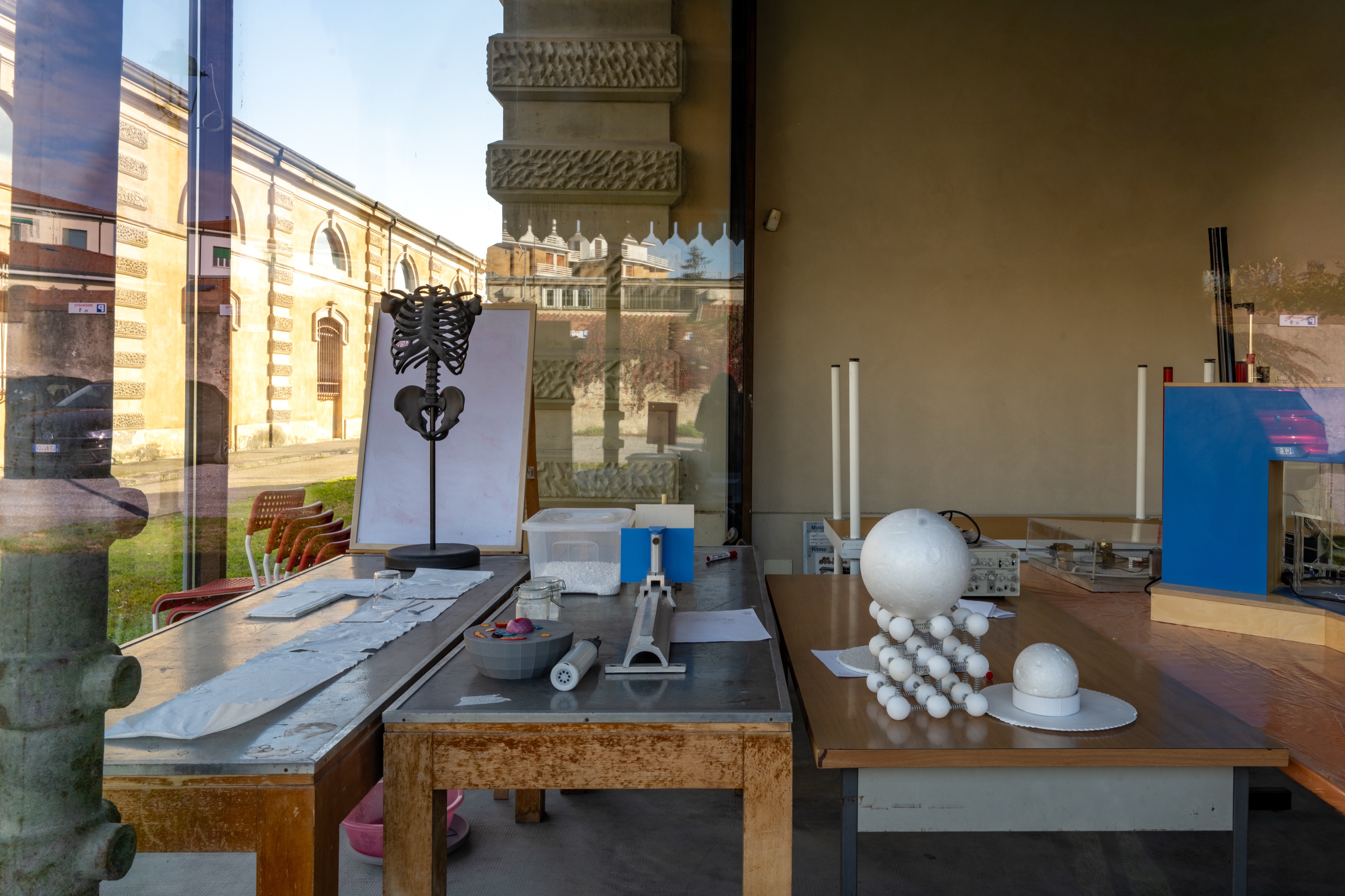
The Museum of Physics Instruments houses scientific instruments for physics and astronomy, as well as a hands-on science lab designed for schools (Ludoteca Scientifica).
Here, visitors can explore an interactive and educational exhibition that, in the spirit of Galileo, recreates the experiments that have shaped the history of science and the work of great scientists. It is a place where children, young people and adults can learn and deepen their understanding of physics through direct experimentation and playful discovery.
After enjoying the chance to explore and experiment with these fascinating instruments, you can continue your journey to the Museum of Calculating Instruments.
7. Museo degli Strumenti per il Calcolo
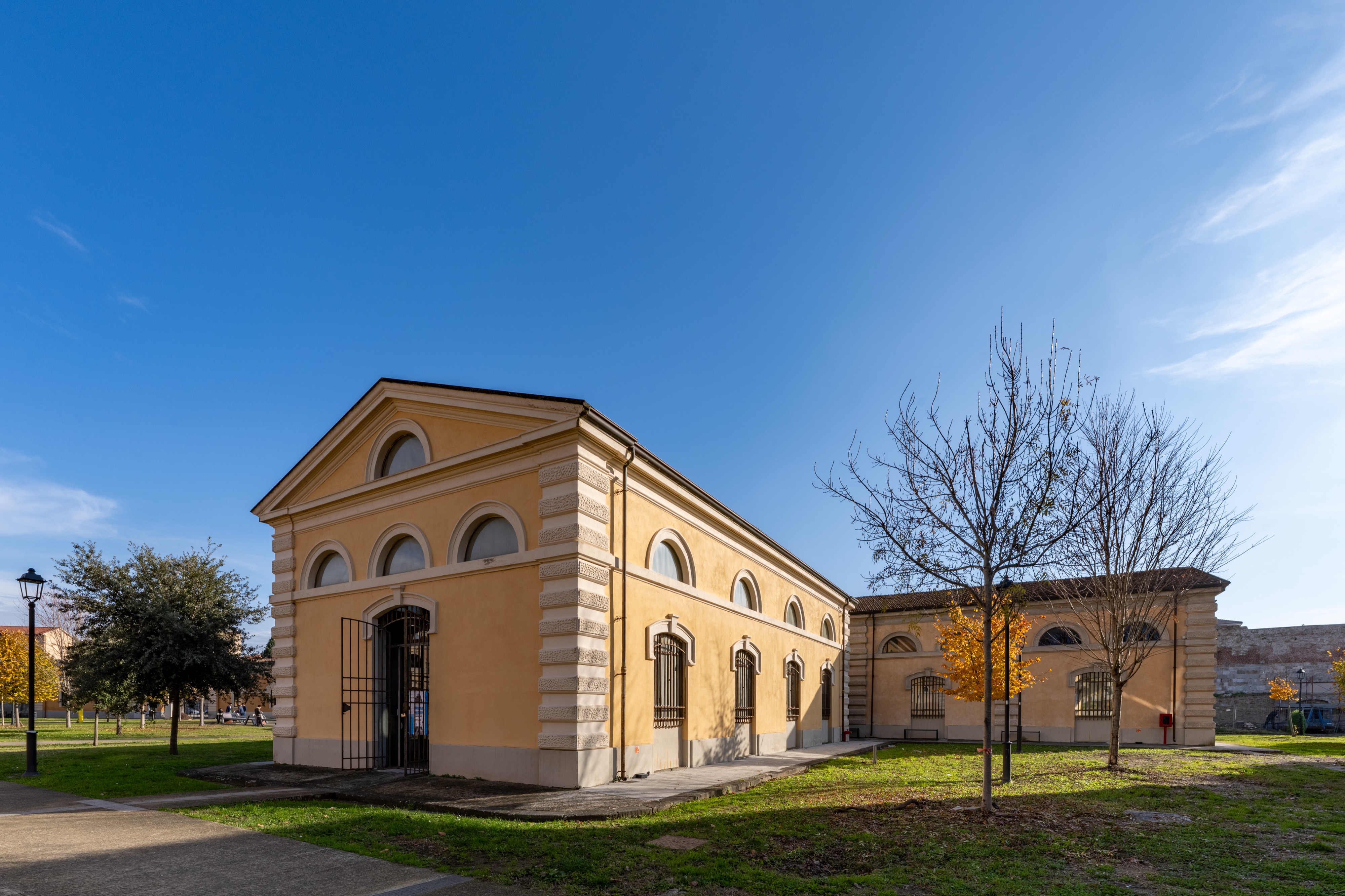
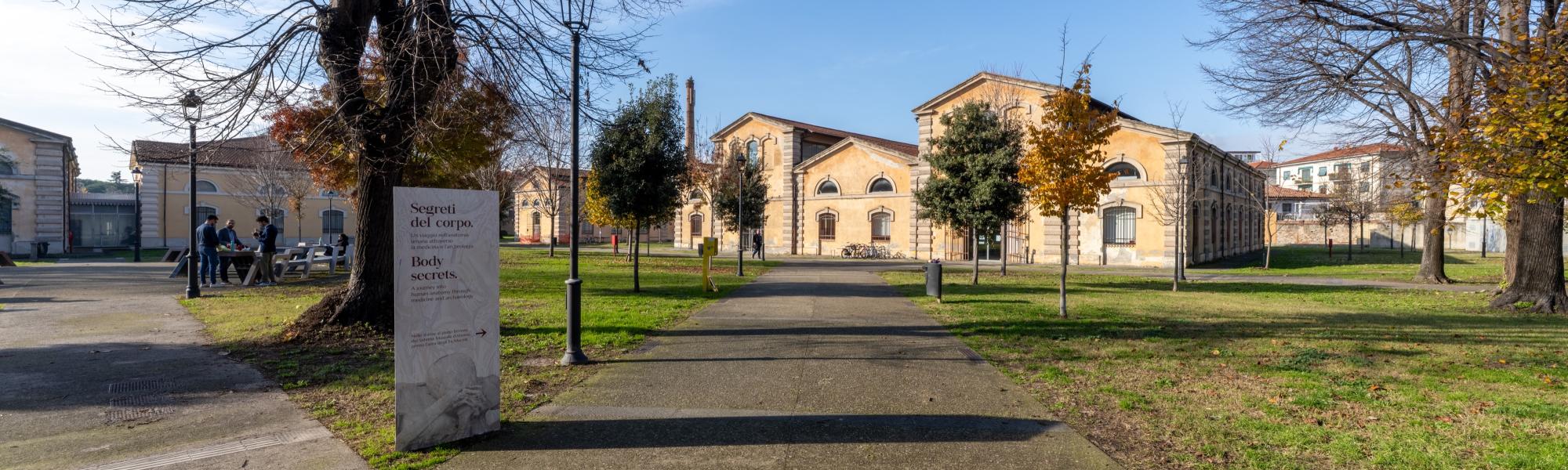
Inaugurato nel 2000, il Museo degli Strumenti per il calcolo dell’Università di Pisa è ospitato nella sede dei vecchi macelli di Pisa. Questi edifici, costruiti in mattoni, erano predisposti ad avere celle per la lavorazione delle carni, forni ed uffici. Dall’esterno ancora si possono intravedere le vecchie ciminiere.
Oggi in quelle sale sono ospitate ricche collezioni di macchine legate alla storia dell'informatica, pezzi unici come la calcolatrice elettronica pisana (intorno alla quale si formò la prima scuola italiana di informatica), e moltissimi altri oggetti che vi permetteranno di fare un viaggio nella scienza dagli strumenti sperimentali di Galileo fino all’epoca moderna.
E per concludere questo meraviglioso tour, quale tappa migliore se non un altro murale dedicato allo scienziato.
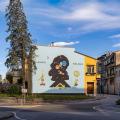
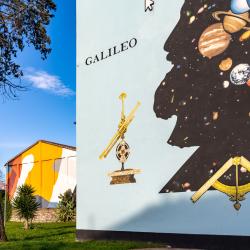
8. Murale di Ozmo dedicato a Galileo Galilei
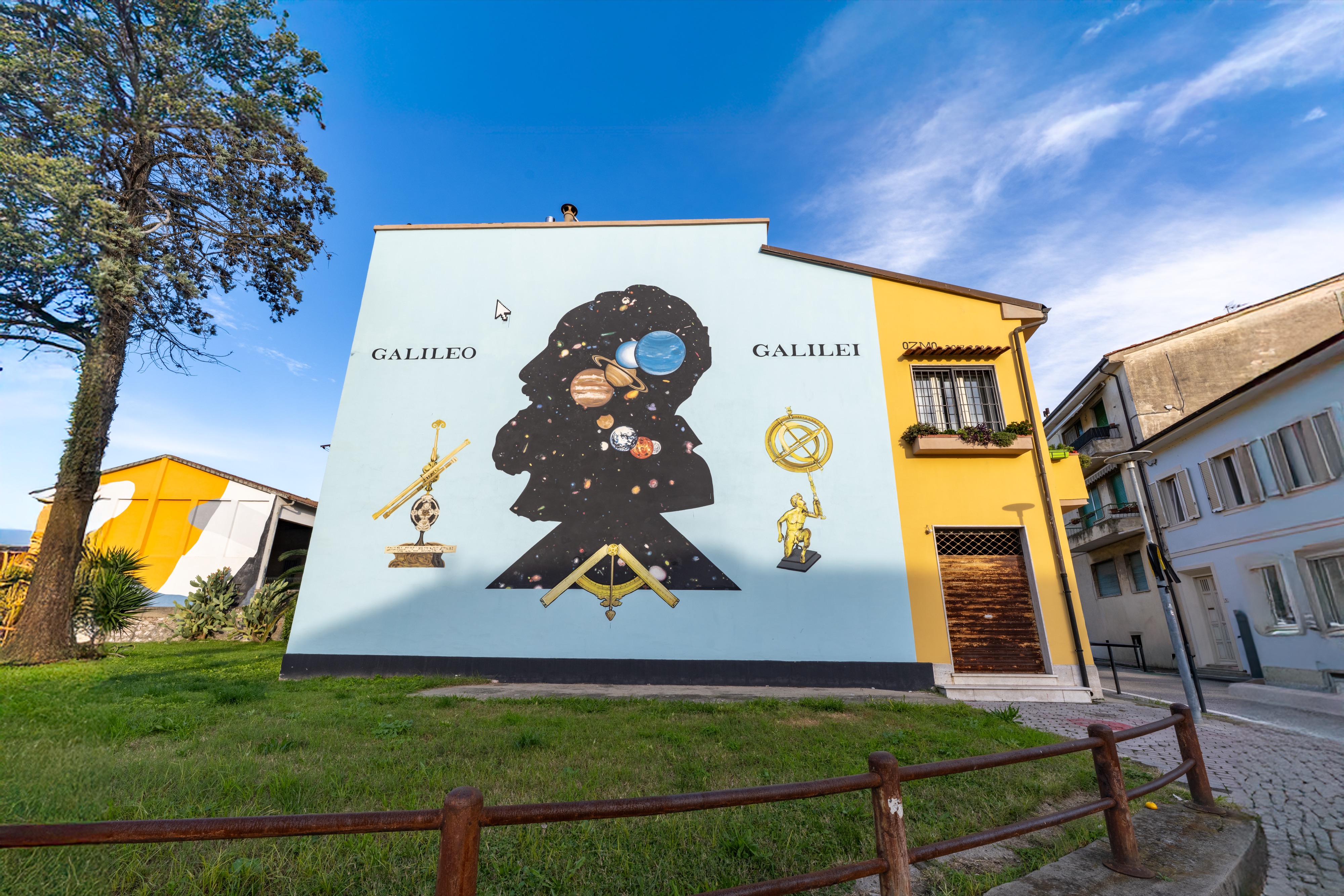
Realizzato per il progetto "StART" in occasione del festival "Welcome to Pisa", il murale dedicato a Galileo Galilei è un’opera monumentale dell’artista italiano Ozmo. Con il suo stile unico e visionario, Ozmo ha voluto rendere omaggio al grande scienziato pisano, celebrandone l’eredità culturale e scientifica attraverso un linguaggio artistico contemporaneo. Il murale rappresenta simboli e riferimenti alla vita e alle scoperte di Galileo, si inserisce perfettamente nella cornice urbana di Pisa, città che ha dato i natali al celebre astronomo e matematico.
Originariamente realizzato nel 2017, il murale fu rimosso a causa della ristrutturazione dell’edificio su cui era stato dipinto. Tuttavia, nel 2022 Ozmo ha deciso di ricrearlo, restituendo alla città un’opera che è diventata un simbolo di connessione tra arte, scienza e territorio.