Quando: spring, summer, autumn
Adatto a: couples, families, groups, individual
Come: on foot or by bike
Introduction
This itinerary is designed to take you through 10 of Pisa’s most iconic sites, combining walks through the city with scenic bike rides. We recommend spending at least two days to fully enjoy the experience. The suggested starting point is the Church of San Michele degli Scalzi, but if you arrive by train, you might begin at Kobra’s mural honoring Galileo. The best time to visit? Any time of year, though spring and autumn offer the most beautiful colors and light.
Pro tip: As you wander along the Lungarni, don’t forget to look up—you’ll be surrounded by stunning historic buildings at every turn.
Day 1
1. San Michele degli Scalzi - Leaning Campanile
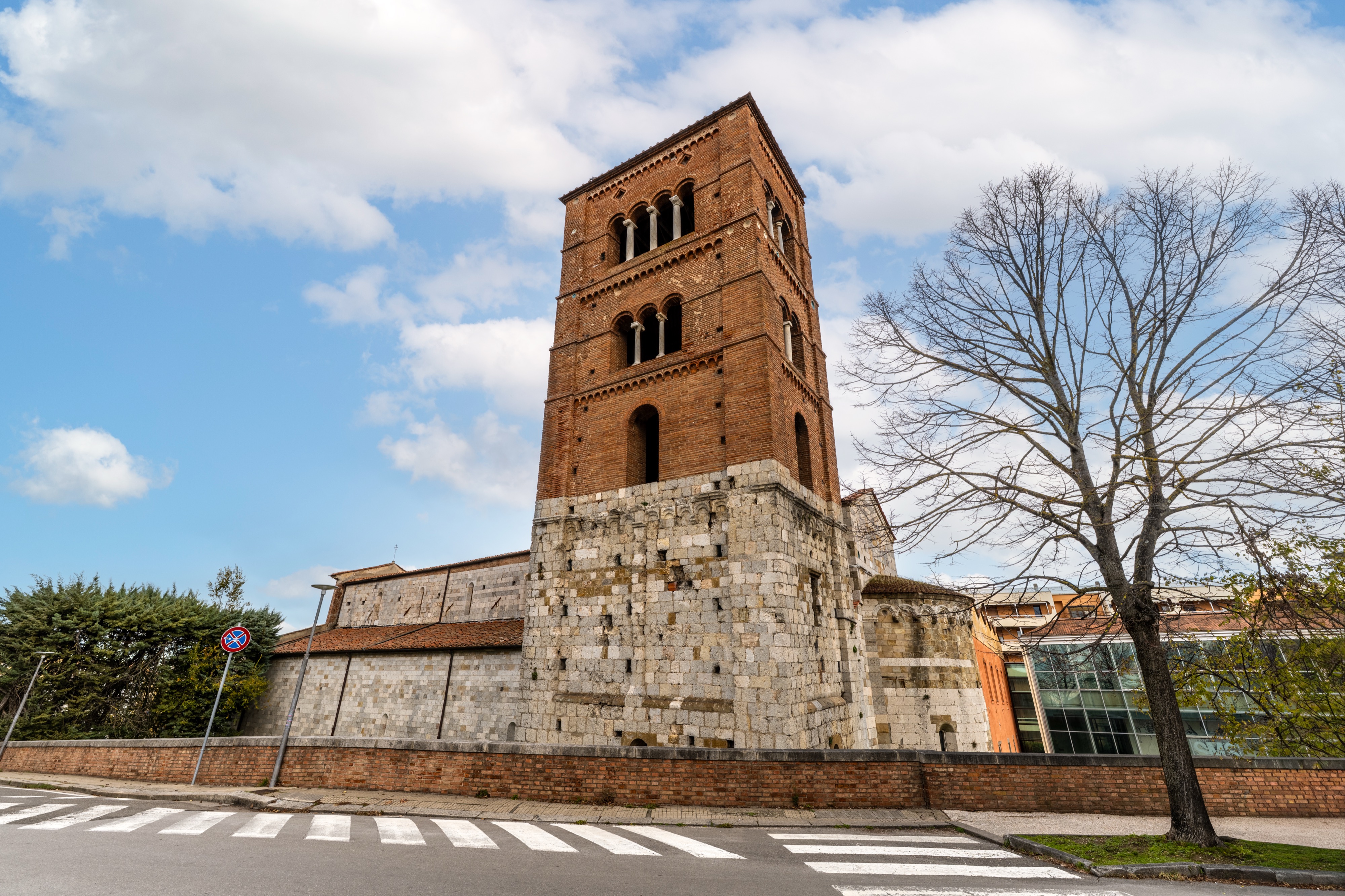
Your journey begins at the the Church of San Michele degli Scalzi, renowned for its remarkably inclined campanile (bell tower) - tilting even more dramatically than the famous tower in Piazza dei Miracoli. Founded in 1025 and rebuilt between 1152 and 1171, the church successively housed several religious orders, including the Benedictines of the Pulsano congregation, Bridgettine nuns, Augustinian canons and Olivetan monks.
Damaged during the Second World War and the 1949 flood, it was partially reconstructed. The campanile, leaning due to subsiding ground, is decorated with medieval ceramics. On the left side, the monastery cloister can be seen, part of which was incorporated into the Richard Ginori factory, now home to the SMS cultural centre.
2. Giardino Scotto
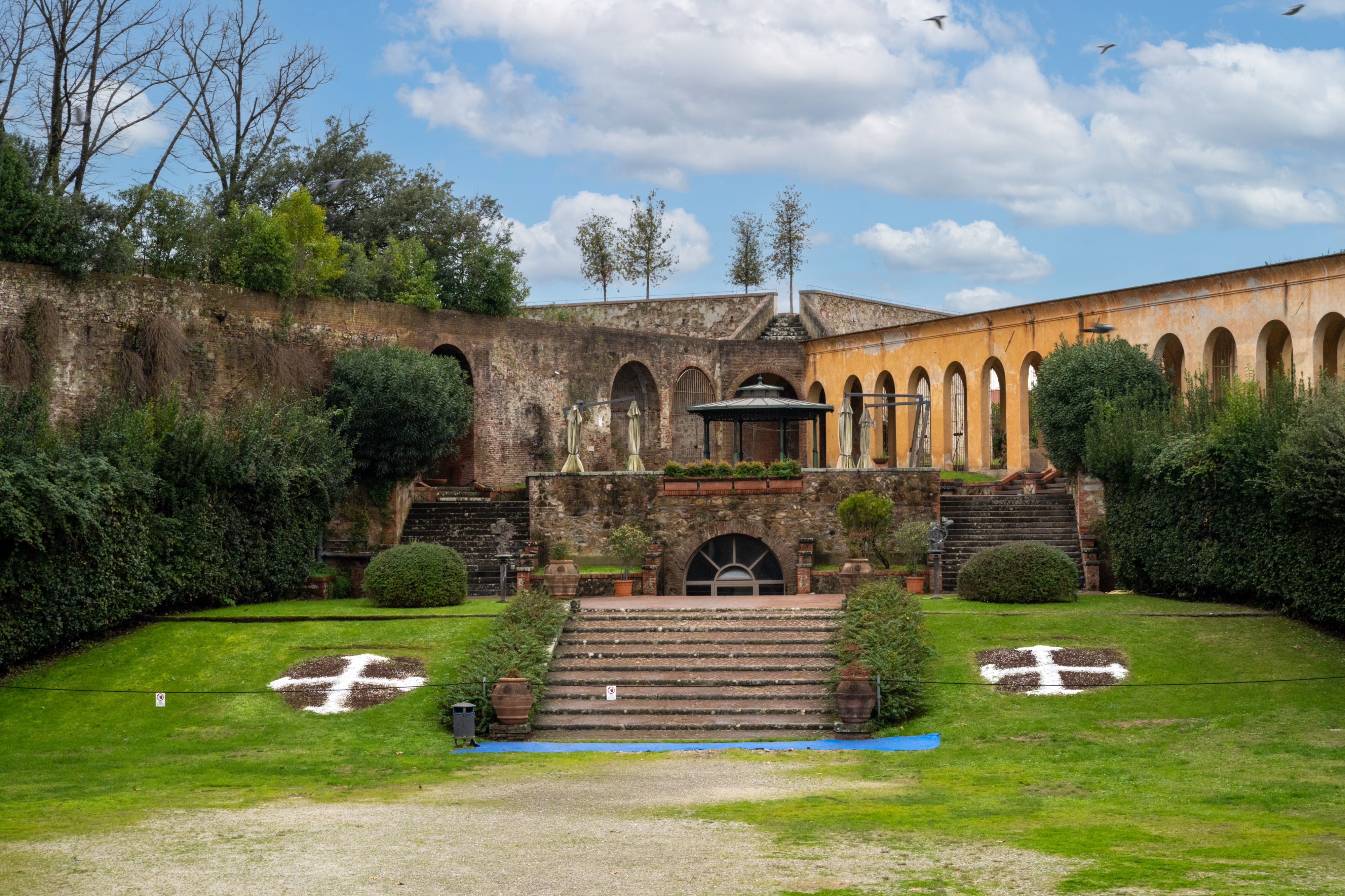
Continue along Lungarno Fibonacci to Giardino Scotto, a 15th-century fortress built during Florentine rule, with contributions attributed to Brunelleschi, later transformed into a public garden. Over the centuries, the complex underwent numerous alterations. In March 2023 a new section of elevated walkways along the city walls was opened, connecting Torre di Sant’Antonio to Bastione Sangallo, fully accessible to visitors with reduced mobility. Access is open every weekend in spring and summer.
Today, Giardino Scotto is a lively green space for families, students, residents and tourists, hosting concerts and theatre performances. It is open to the public daily except on certain holidays (Christmas, January 1°, Easter, May 1°).
3. "Galileo Galilei" mural by Eduardo Kobra
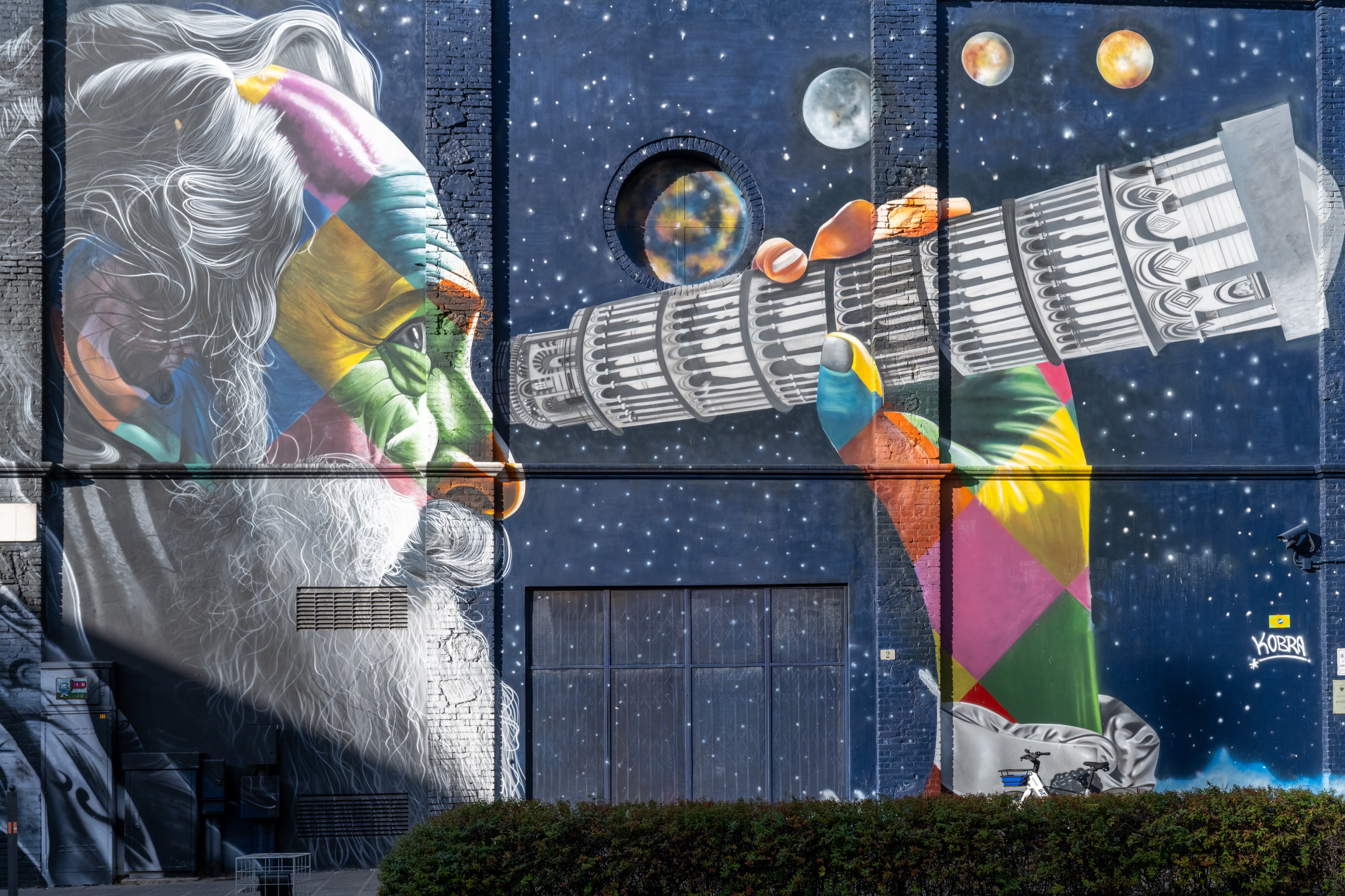
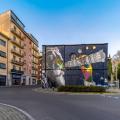
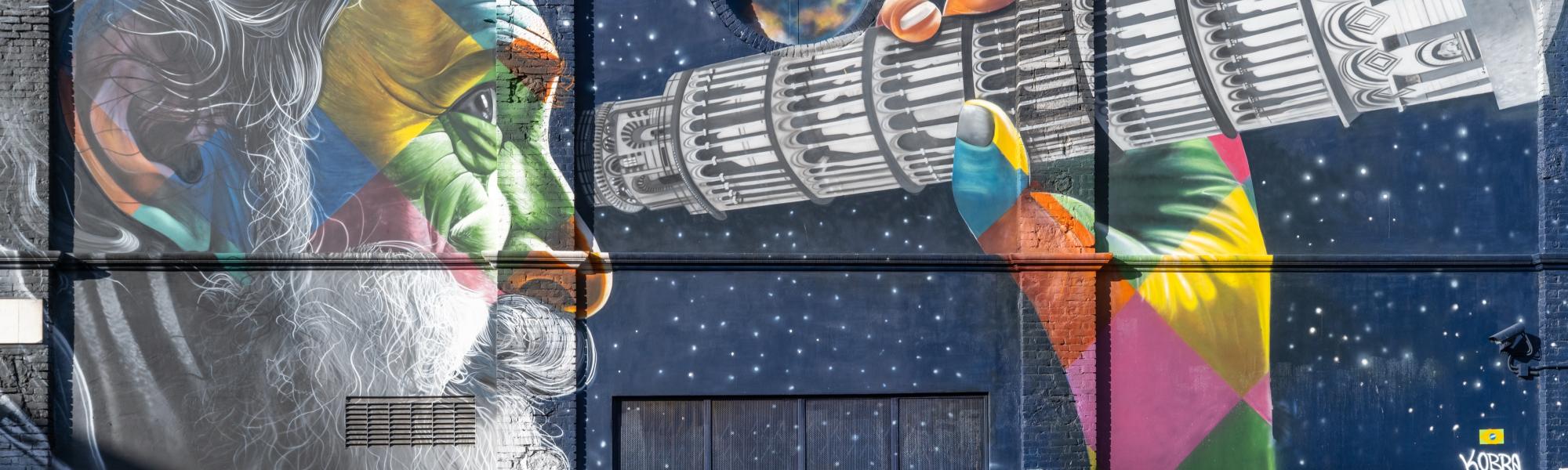
From Piazza Vittorio Emanuele II, a short walk leads to the monumental mural dedicated to Galileo Galilei by Brazilian street artist Eduardo Kobra. Covering more than 160 square metres, the artwork transforms the façade into a vast contemporary canvas. Lines, geometric patterns and vibrant colours evoke networks, routes, and connections, celebrating Pisa’s historic role as a hub of navigation, scientific discovery, and international cultural exchange.
Galileo’s figure symbolically bridges past and present, representing the link between scientific discoveries and technological innovation.
4. "Tuttomondo" mural by Keith Haring
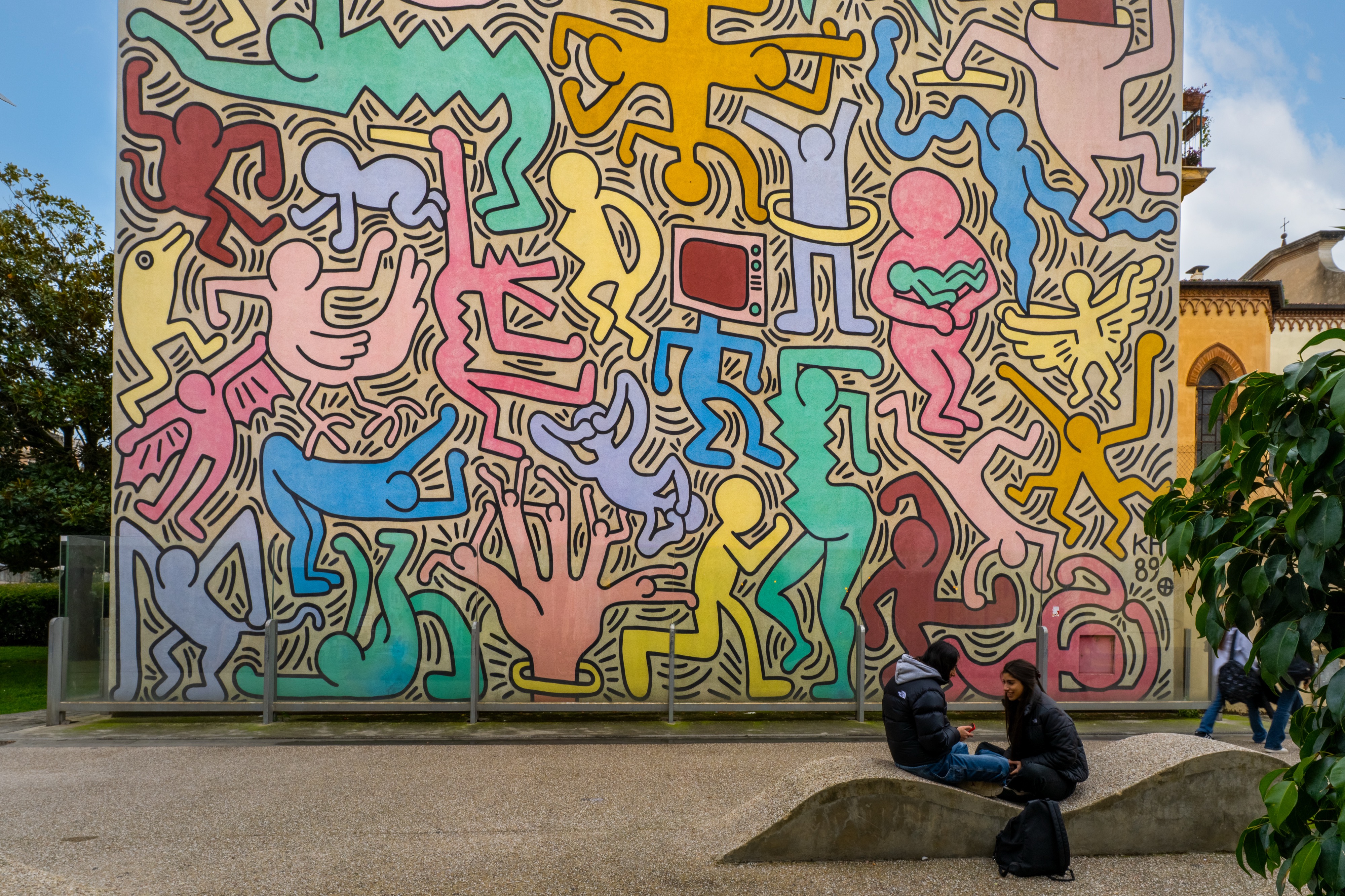
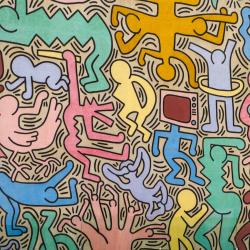
Just a few steps away is “Tuttomondo”, one of Keith Haring’s largest surviving murals, painted in 1989 on the rear façade of the Church of Sant’Antonio Abate. It celebrates love and harmony between humans, animals, and nature. Each figure carries symbolism: the hands represent collective work, the broken serpent the fight against evil, and the central cross evokes Pisa’s historic symbol.
5. Chiesa di Santa Maria della Spina
After a must-have selfie at Haring’s mural, head to nearby Corso Italia, wandering past shop windows until reaching Ponte di Mezzo, especially magical at sunset when the Arno glows in golden light.
Turn left onto Lungarno Gambacorti. Along the way, pass Palazzo Blu, a striking museum of contemporary and classic art, and the colourful façade of the nearby Church of Santa Cristina.
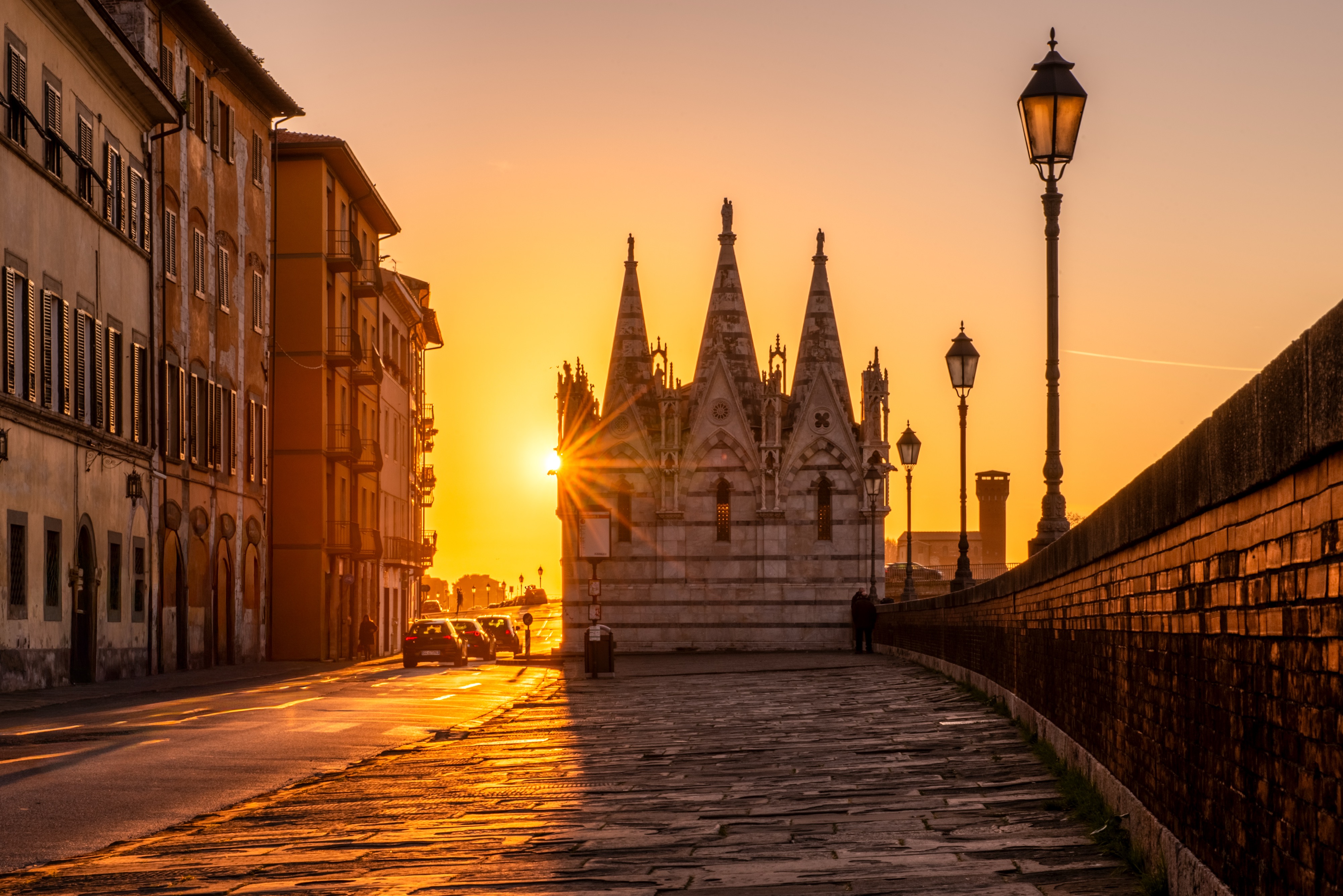
The final destination is the Church of Santa Maria della Spina, a jewel of Gothic architecture. Founded in the 12th century and remodelled in the 14th, it is famed for its intricate decorations and sculptures by artists such as Giovanni and Andrea Pisano. It once housed a thorn believed to be from Christ’s crown. Following repeated flooding, the church was carefully dismantled and reconstructed on higher ground in the 19th century, preserving its delicate architecture. Today it hosts temporary exhibitions.
6. Piazza dei Cavalieri
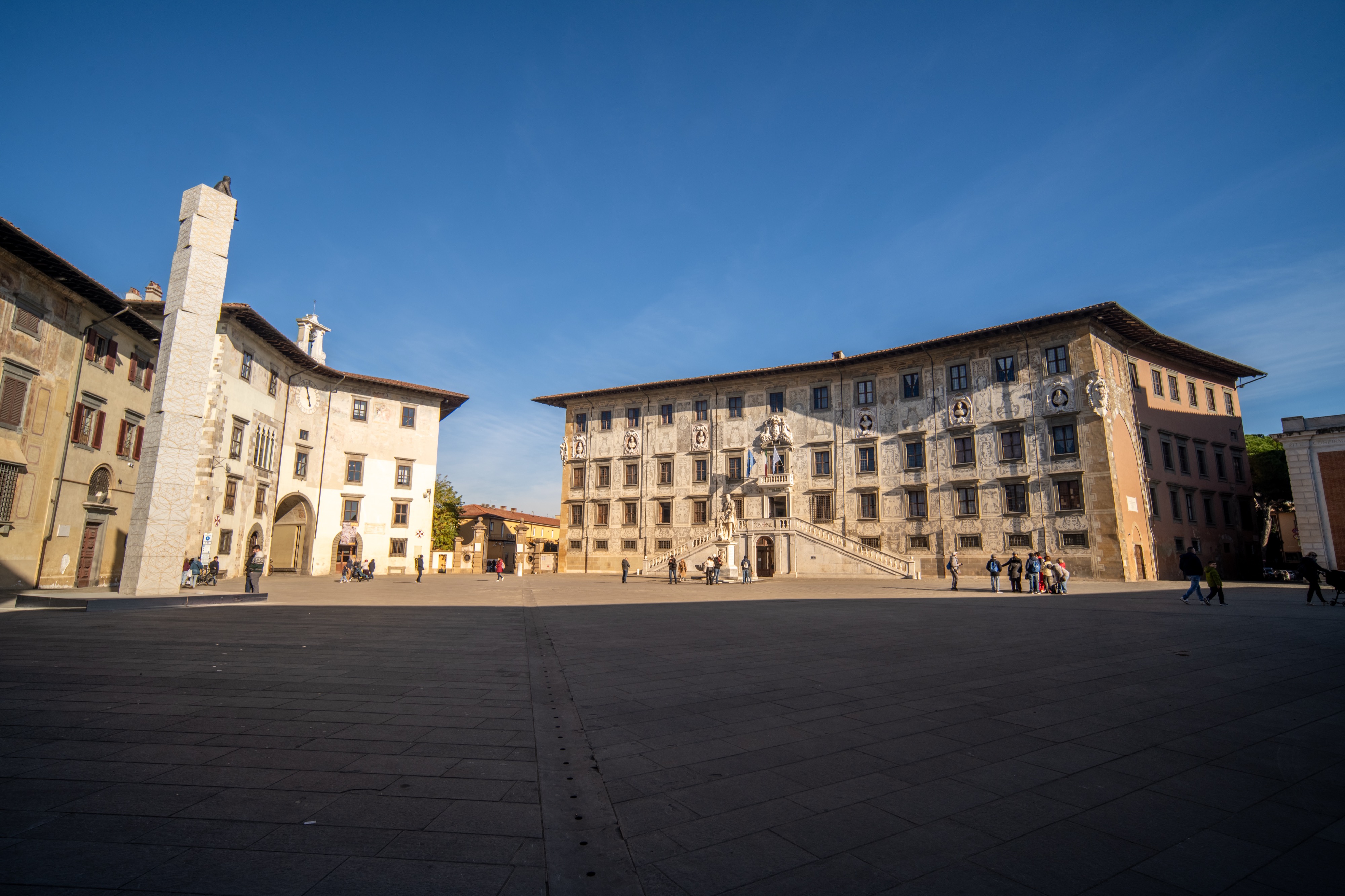
From Lungarno Gambacorti, cross the Arno via Ponte Solferino, then turn right along Lungarno Pacinotti. Continue straight on until reaching Via San Frediano on your left, which will guide you to Piazza dei Cavalieri, one of Pisa’s most beautiful squares.
In the Middle Ages, this square was known as Piazza delle Sette Vie, for the streets converging upon it. It hosted important buildings like Palazzo degli Anziani and the Torre della Muda, famously connected to the tragic story of Count Ugolino, immortalised by Dante Alighieri in his Divine Comedy.
In the 16th century, Cosimo I de' Medici commissioned Giorgio Vasari to redesign the square. It became the headquarters of the Order of the Knights of Saint Stephen and the centre of Medici power in Pisa, reflecting the family’s political and cultural authority.
The Palazzo della Carovana, home to the Scuola Normale Superiore, is distinguished by its allegorical sgraffiti. The Palazzo dell’Orologio and Church of Santo Stefano complete the ensemble, making it a perfect stop for history, architecture, and photography.
7. Piazza dei Miracoli
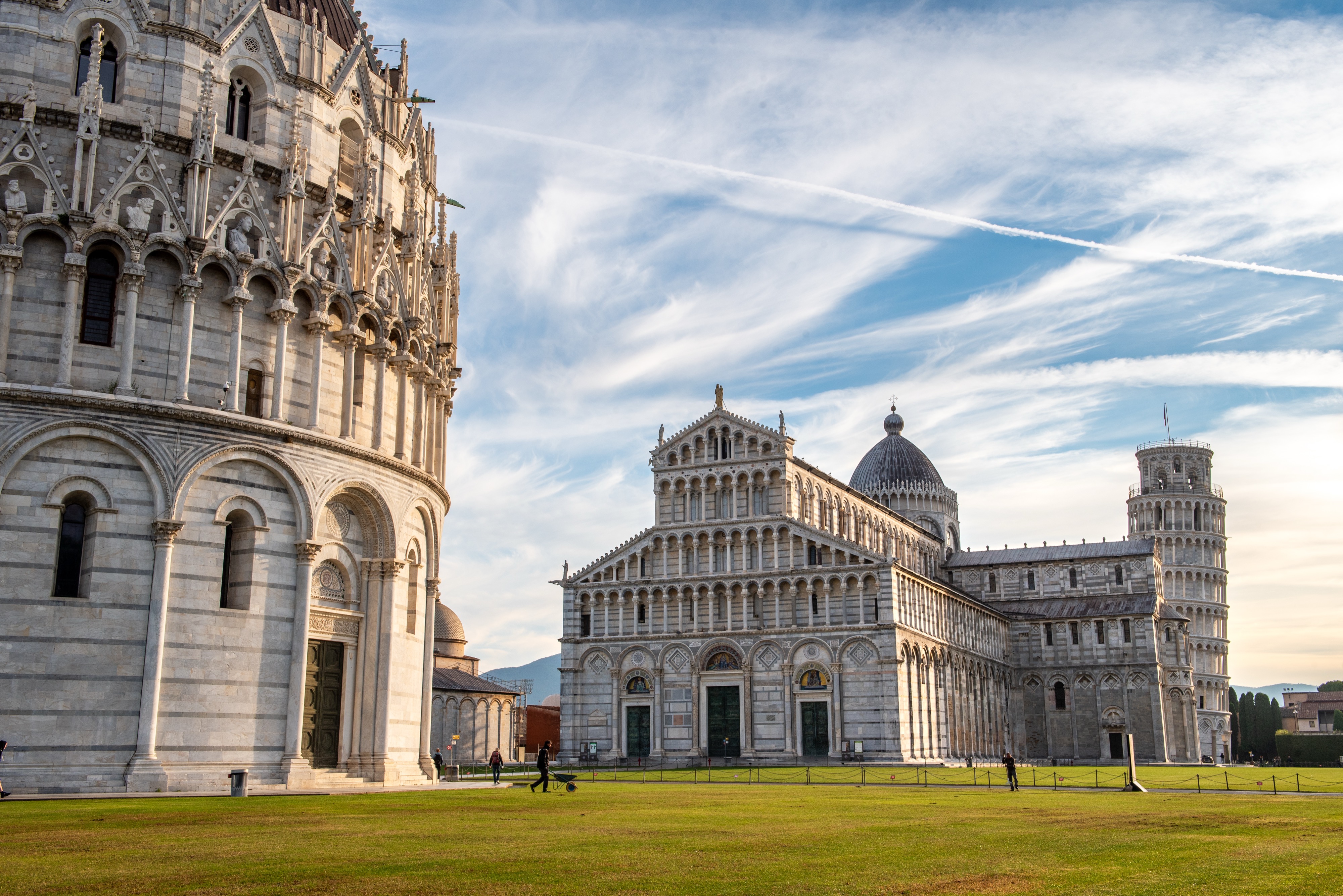
Here, your creativity behind the lens can truly shine. The Piazza dei Miracoli, a UNESCO World Heritage site, is one of the world’s most famous and iconic locations, celebrated for its stunning beauty and deep historical and cultural significance. Its four monuments together - the Cathedral, Baptistery, Leaning Tower, Monumental Camposanto - tell the story of Pisa’s extraordinary artistic and spiritual heritage.The name ‘Field of Miracles,’ coined by Gabriele D’Annunzio, evokes a magical atmosphere, where each monument tells a story connected to the cycle of human life.
The Baptistery of San Giovanni, with its unique acoustics and the Pulpit by Nicola Pisano, represents the gateway to Christian spirituality. The Cathedral of Santa Maria Assunta, begun in 1063, is a masterpiece of Pisan Romanesque architecture, enriched by Arab and Byzantine influences, and houses works by great masters such as Cimabue and Giovanni Pisano. The Monumental Camposanto, with its frescoes and Roman sarcophagi, is a place of memory and art, while the Leaning Tower, famous for its tilt, needs no introduction—though few know it originally served as the Cathedral’s bell tower.
Pisan Romanesque style, born right here, reflects the cultural dialogue between Pisa and the Mediterranean, visible in the alternating marbles and the Arabesque details.
Day 2
For this second day, we recommend renting a bicycle to follow the itinerary from the city center all the way to the coast, cycling through San Rossore Park.
1. Cittadella di Pisa and the Arsenals
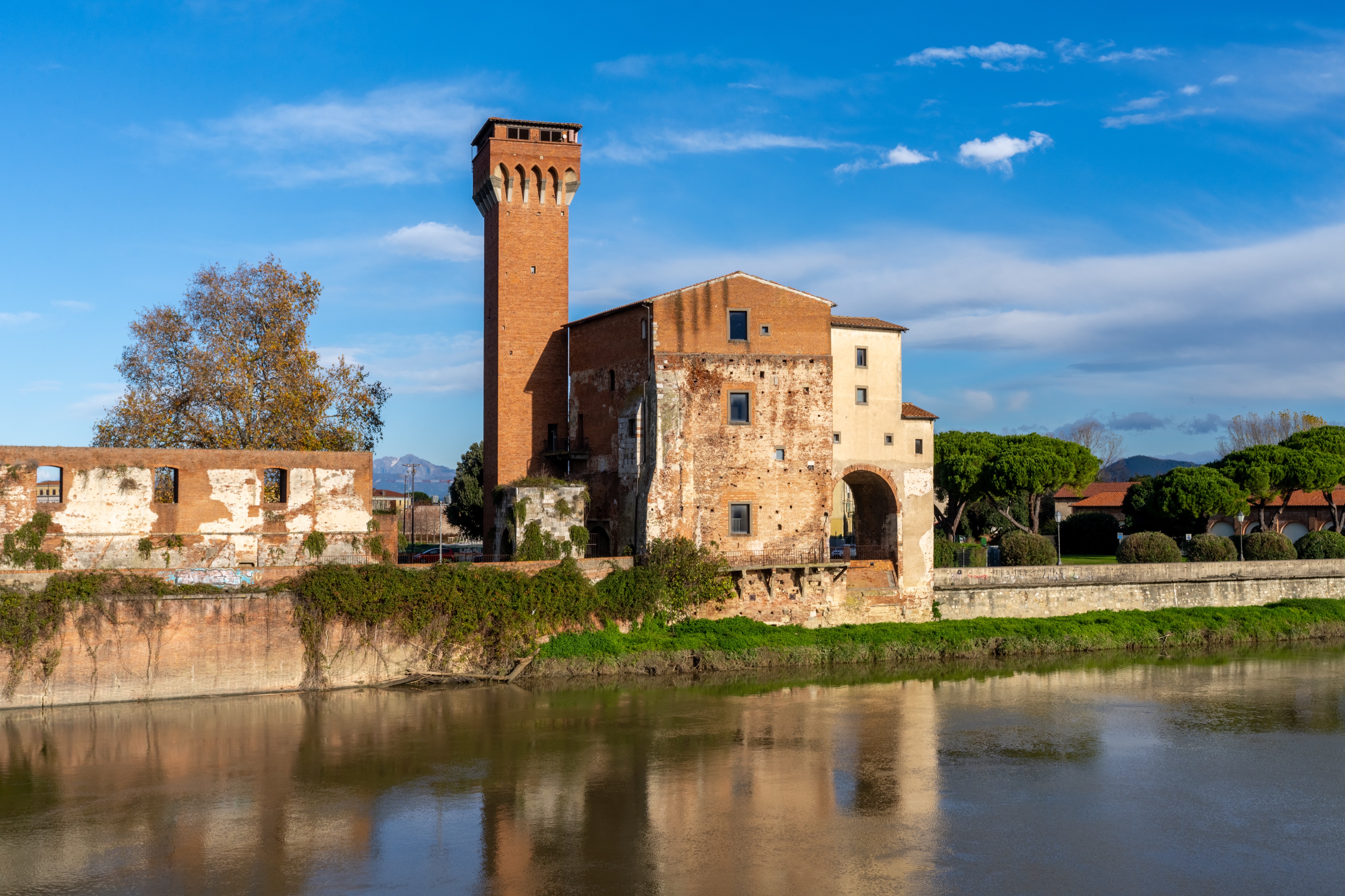
Start the second day of your itinerary at the citadel and the arsenals. Take some time to explore this area of the city, where the story of Pisa’s past is brought to life.
The Arsenali Repubblicani, built in 1160 within the medieval walls, once featured a vast water basin where the Pisan galleys—long, formidable warships—were constructed. The grandeur of the arsenals was such that Alfonso IV of Aragon drew inspiration from them to build a similar complex in Porto Torres.
Following the Florentine conquest in 1406, the Citadel was transformed and enriched with the Guelf Tower, which was later rebuilt after being damaged in World War II.
The Medici Arsenals, built between 1548 and 1588 to a design by Bernardo Buontalenti, were originally used to construct war galleys up to 50 meters long. Later, as shipbuilding declined, they were converted into stables for the Dragoon cavalry, serving as a center for horse selection up to the Kingdom of Italy. Today, they house the Museum of Ancient Ships, an extraordinary archaeological treasure displaying over 30 ancient ships, dating from the 2nd century BC to the 5th century AD, along with thousands of artifacts that tell the story of Pisa’s navigation and maritime trade.
2. Via del Gombo - San Rossore Natural Park
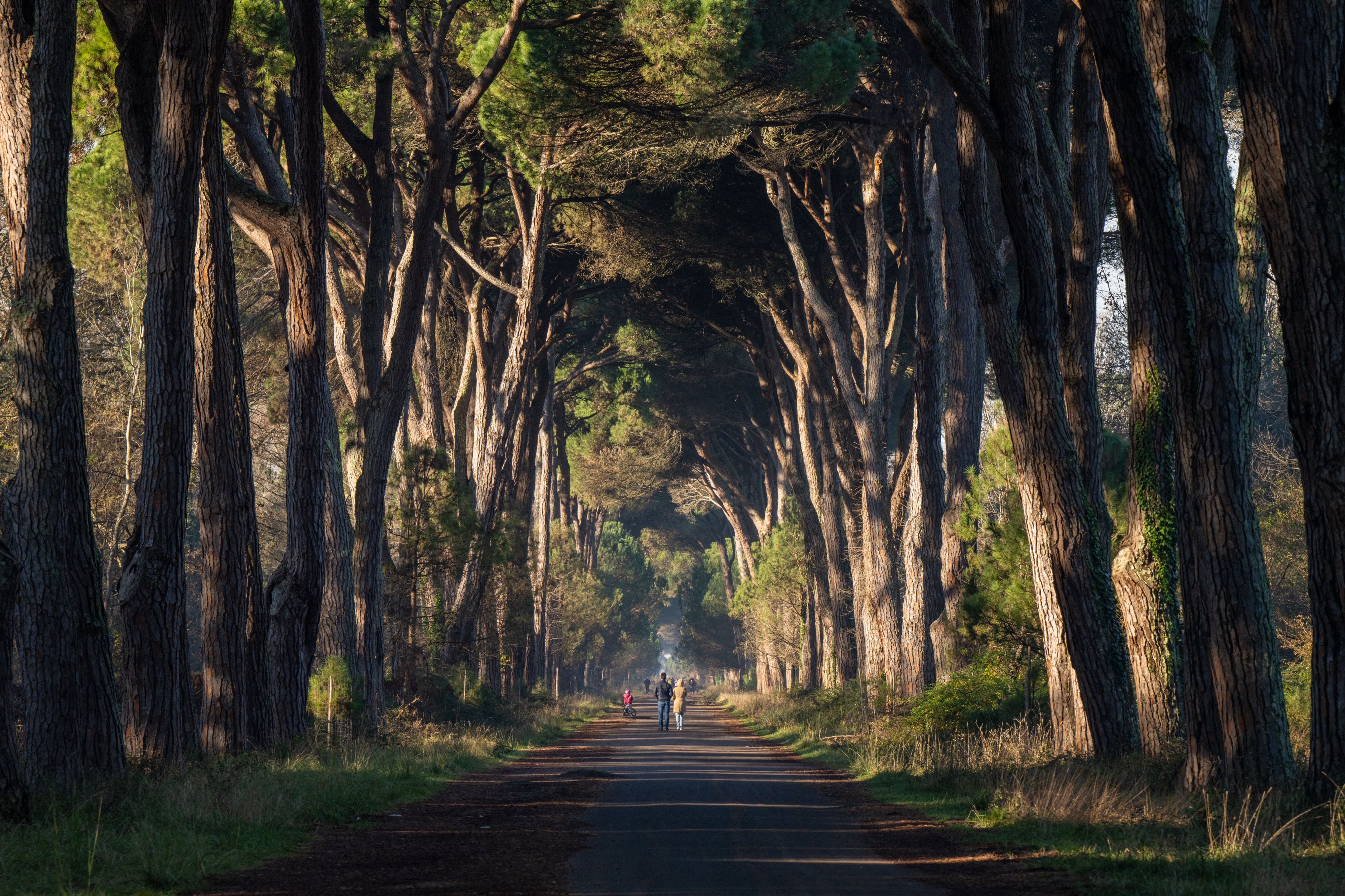
Now it’s time to hop on your bicycle and enjoy a short ride of just over 20 minutes to San Rossore Park, especially the Tenuta di San Rossore area. Cycling along the Viale del Gombo, you’ll feel as if you’ve stepped into a painting by Giuseppe Viviani, a painter and engraver from San Giuliano Terme who dedicated many of his works to Pisa, the Park, and the coastline.
Soak up the beauty of nature, breathe in its fragrances, and discover the many activities waiting for you in this truly magical place.
3. Retoni - Bocca d’Arno, Marina di Pisa
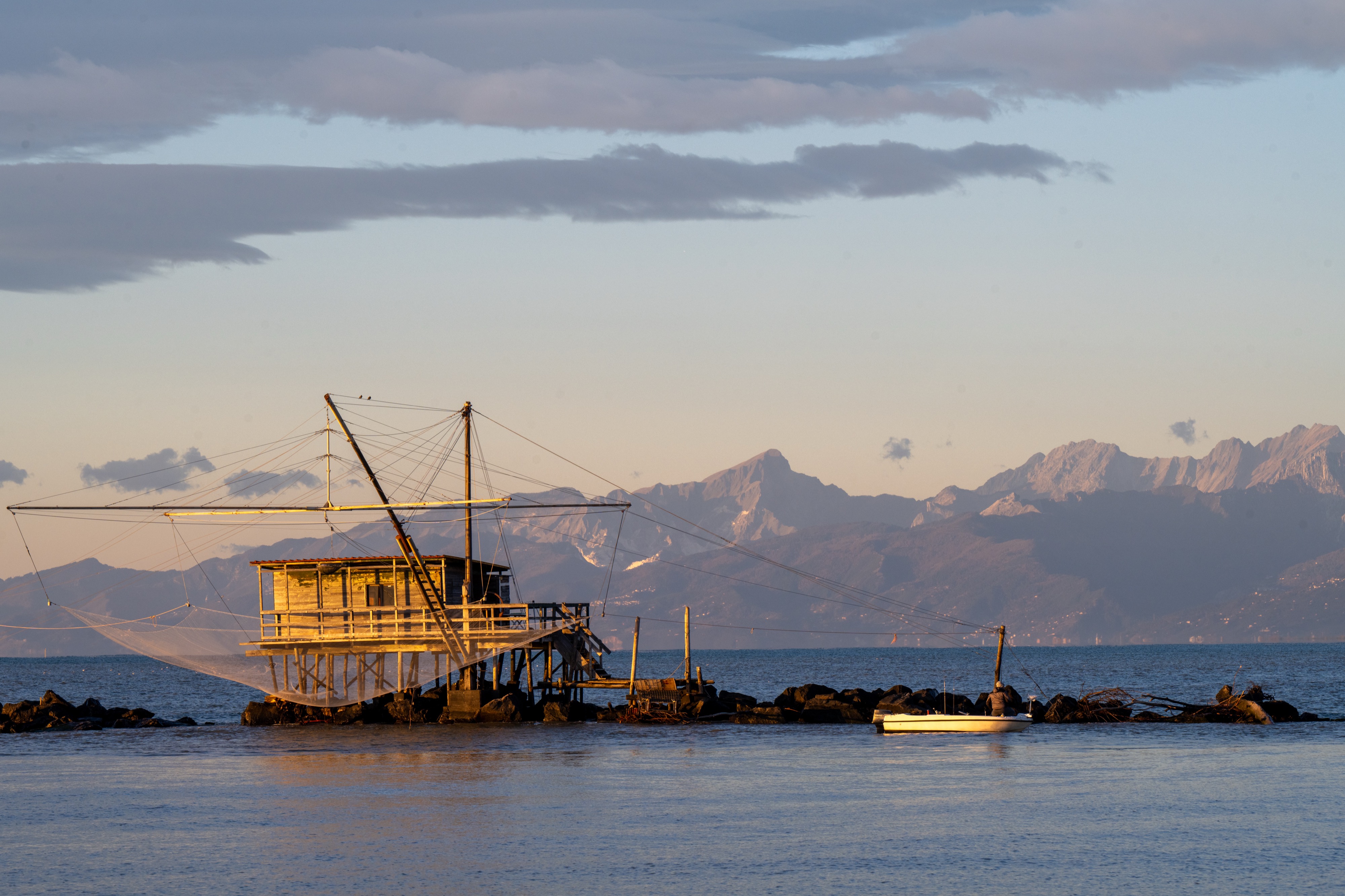
After exploring the Park, hop back on your bike and follow the tramway cycle path to the coast, reaching Boccadarno with its stunning, postcard-perfect seafront.
Here, the Retoni add a truly unique touch to the landscape. These wooden huts, built by fishermen after World War II, were designed to hold huge fishing nets called ‘bilance.’ The name ‘Retoni’ comes from the local dialect, reflecting the nets’ impressive size - up to 22 by 22 meters.
Take a few photos, then let yourself be swept away by the authentic beauty of the sea.